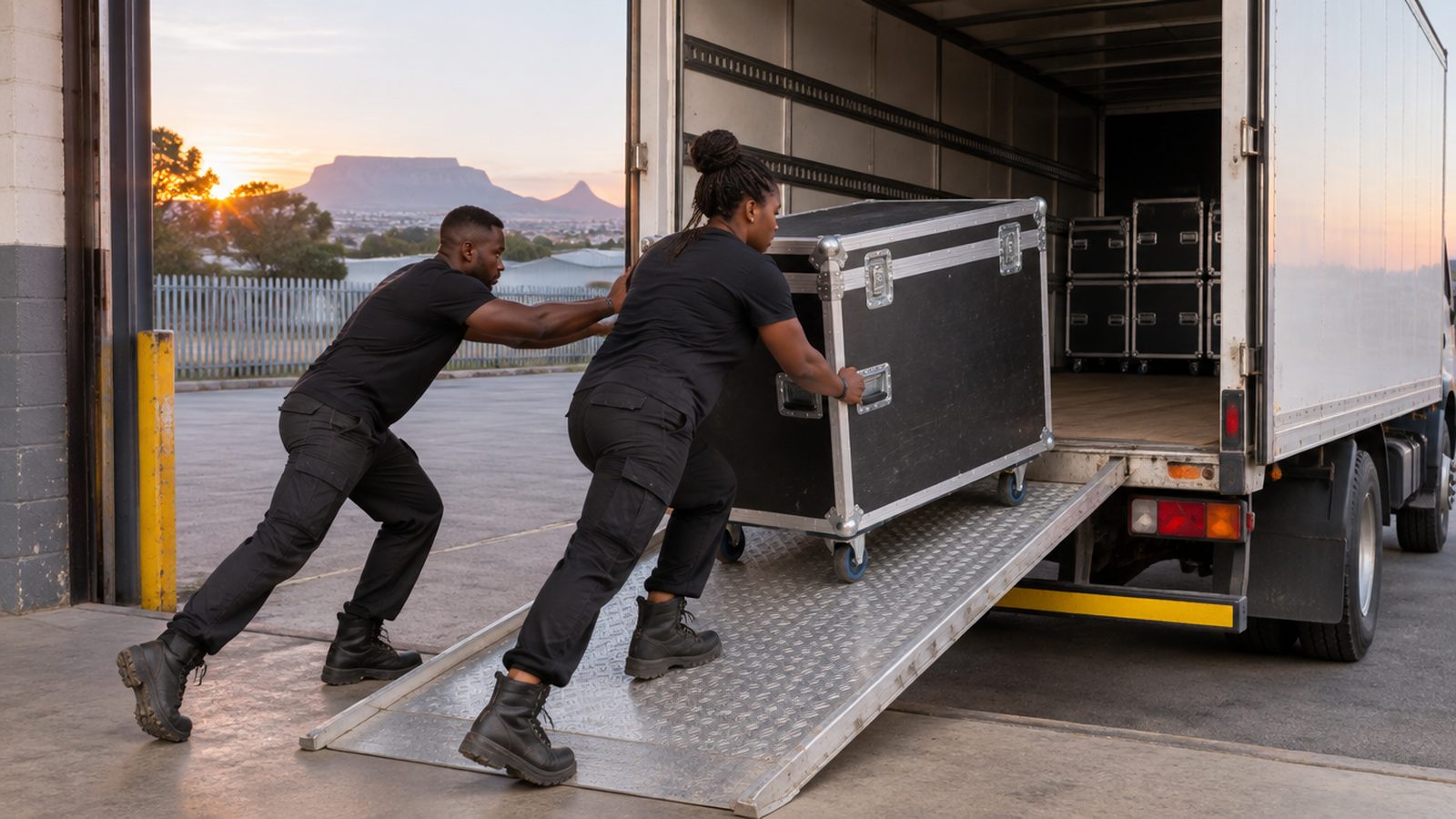
01The job sheet and the pick list
Load-in starts on paper. The job sheet says where, when and what. The pick list turns that into every item that must be on the truck. If it is not on the list, it does not get there.
Job sheet
Venue and address, contact person and number, access times, call time, doors, finish, what the client ordered.
Pick list
Every item by name and count. Speakers, stands, desk, every cable type, power, spares, tape, tools.
Site notes
Loading bay or front door. Stairs or lift. Distance to the room. Where the power is. Parking for the truck.
- Read the job sheet the day before, not in the cab.
- Phone the venue contact if access is not clear. Ask about the lift size, the bay hours and where the truck may stand.
- Pick against the list and tick each line (Module 14).
- Spares on every job: two XLRs, a power lead, a multiplug, gaffer tape, batteries, a mic.
The pick list is the show in a column. Read it out loud once before the doors close on the truck.
02Packing the truck
- Heavy, low, forward. Subs and amp racks on the floor against the bulkhead. Weight over or ahead of the rear axle, spread left to right.
- Last on, first off. Power, the cable trunk, trolleys and ramps go on last. They come off first and everything else needs them.
- Tight rows. Cases wheel to wheel with no gaps. A gap is room to gain speed.
- Light on heavy. Never a sub on a desk. Nothing on a DJ case lid.
- Wheels locked or chocked. Brakes on, or the case turned so the wheels are off the floor line.
- Loose items in a trunk. Stands in the stand bag. Nothing rolling around the floor.
Our trucks and music buses each have a set layout. Learn the layout for the vehicle you are on, and put things back where the next crew expects them.
Pack it so the first thing you need is the first thing you see when the doors open.
03Strap it, weigh it, drive it
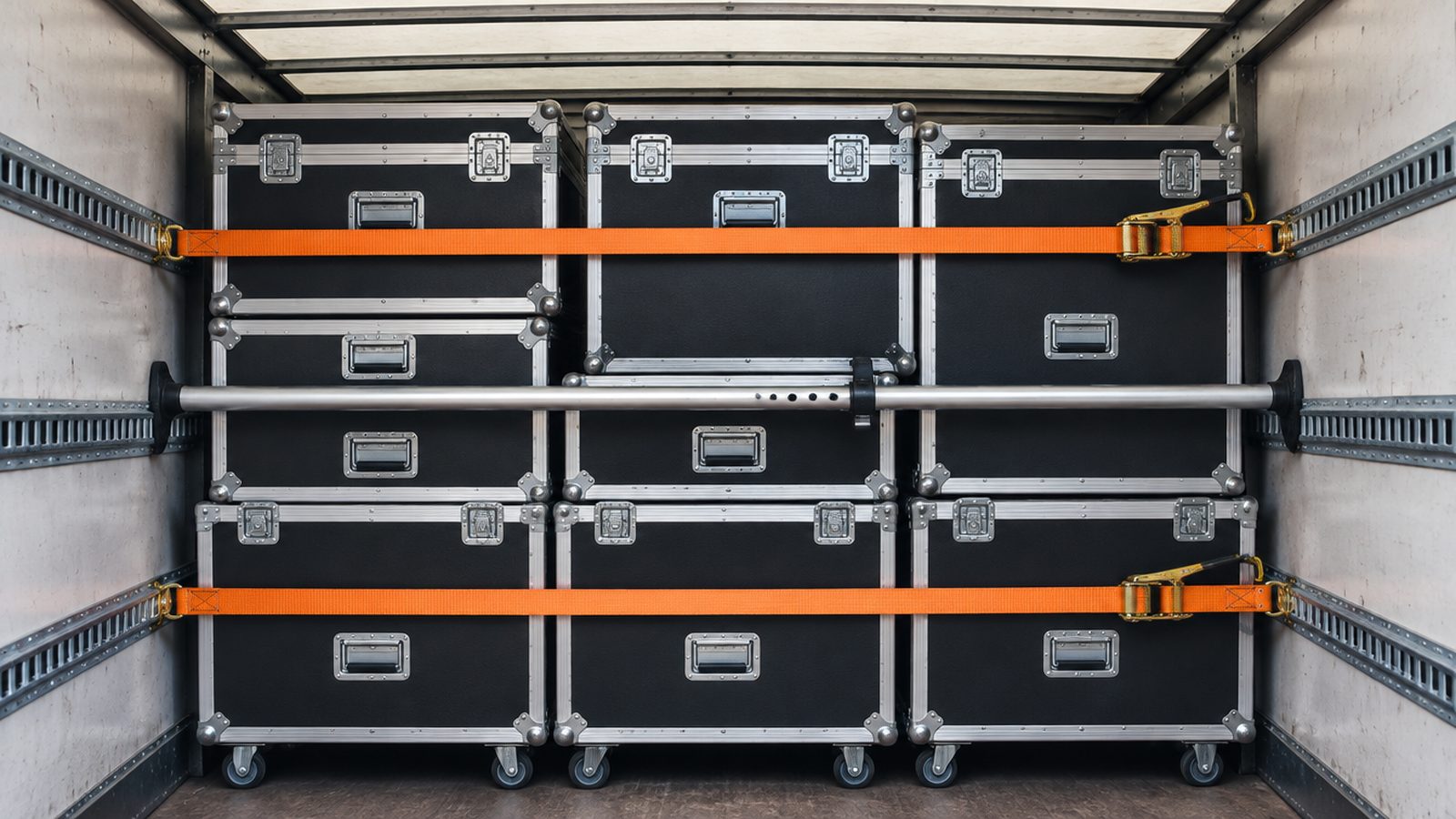
In a hard stop, an unstrapped case keeps moving at the speed the truck was doing. A loaded sub weighs as much as a person. Strapping is not optional.
- One strap or load bar per row, hooked to the truck's rails or rings, not to another case.
- Ratchet tight, then tie off the tail so it cannot flap or unwind.
- Check straps for cuts and frayed edges. A damaged strap goes in the bin.
- Do not overload. Every vehicle has a maximum legal mass on its licence disc and data plate. Kit plus crew plus fuel must be under it.
- Re-check after the first few kilometres and after any rough road.
- Drive like the load is glass. Wide corners, early brakes, slow over speed bumps.
Nobody rides in the load bay. Ever.
If you would not stand behind it in an emergency stop, it is not strapped.
04Work back from doors
The only fixed time is doors. Everything else is worked backwards from it: soundcheck, build, load-in, travel, loading. Add the gaps and you get the time the truck must leave.
Try it: when must the truck leave?
Set the doors time and how long each stage takes. The tool works backwards.
- Ready before doors means finished, tidy and quiet. The client walks the room in that hour.
- Buffer the travel. Friday afternoon traffic, a truck stop, a wrong gate.
- Check venue access. If the bay opens at 14:00, an earlier arrival only means waiting in the sun.
- Tell the crew chief early if you are running late. Fifteen minutes of warning is worth more than an apology.
Late is decided at the warehouse, not at the venue.
05Arriving and getting in
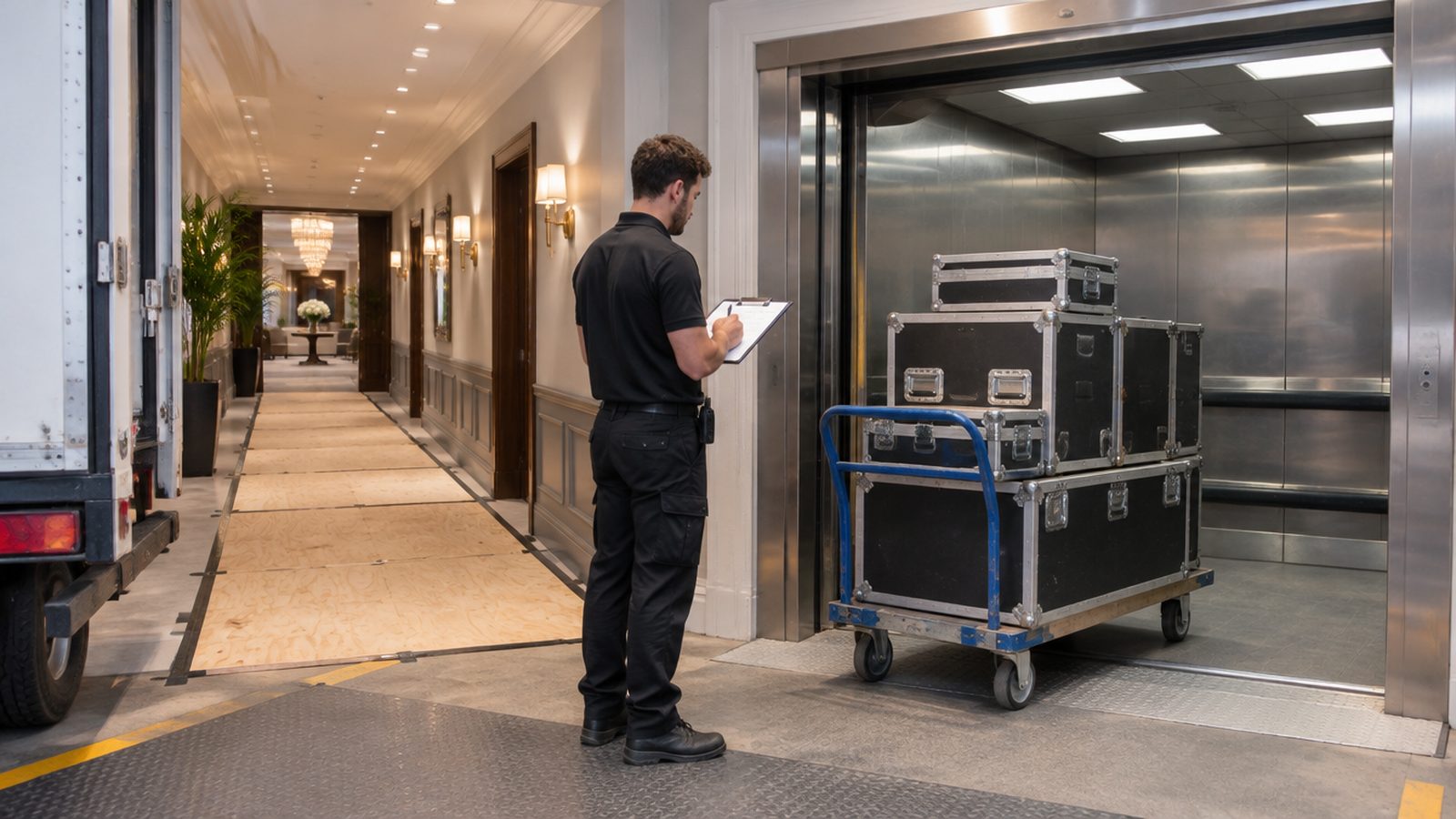
- Report first. Find the venue contact or duty manager. Sign in. Ask where the truck may stand and for how long.
- Walk the route from the truck to the room before moving a case. Doors, lift size, stairs, slopes, carpets, fire doors.
- Protect the venue. Boards over thresholds and soft floors. Corner guards if they ask. No dragging cases on wood or marble.
- Find the power and the room layout before the kit comes in (Module 8).
- Keep fire exits and corridors clear. Empty cases go where the venue says, not in an escape route.
- One person stays with the truck while it is open.
Five minutes walking the route saves an hour of carrying the wrong way.
06Load-in order and the dead-case plan
Bring the kit in the order it gets built. Otherwise the room fills with cases and nobody can work.
- Place, do not dump. Each case goes to where its contents will live. Speakers to the speaker positions, desk case to front of house.
- Lift properly (Module 13). Two people for subs and racks. Use the trolley and the ramps.
- Dead cases are empty cases. Stack them neatly in the store room the venue gives you, lids on, in the order you will need them back.
- Keep the lids with the cases. A lost lid is a damaged desk on the way home.
- Sweep the room for tape, cable ties and packaging before the client arrives.
A case touches the floor twice: once coming in, once going out.
07Load-out: fast, but in order
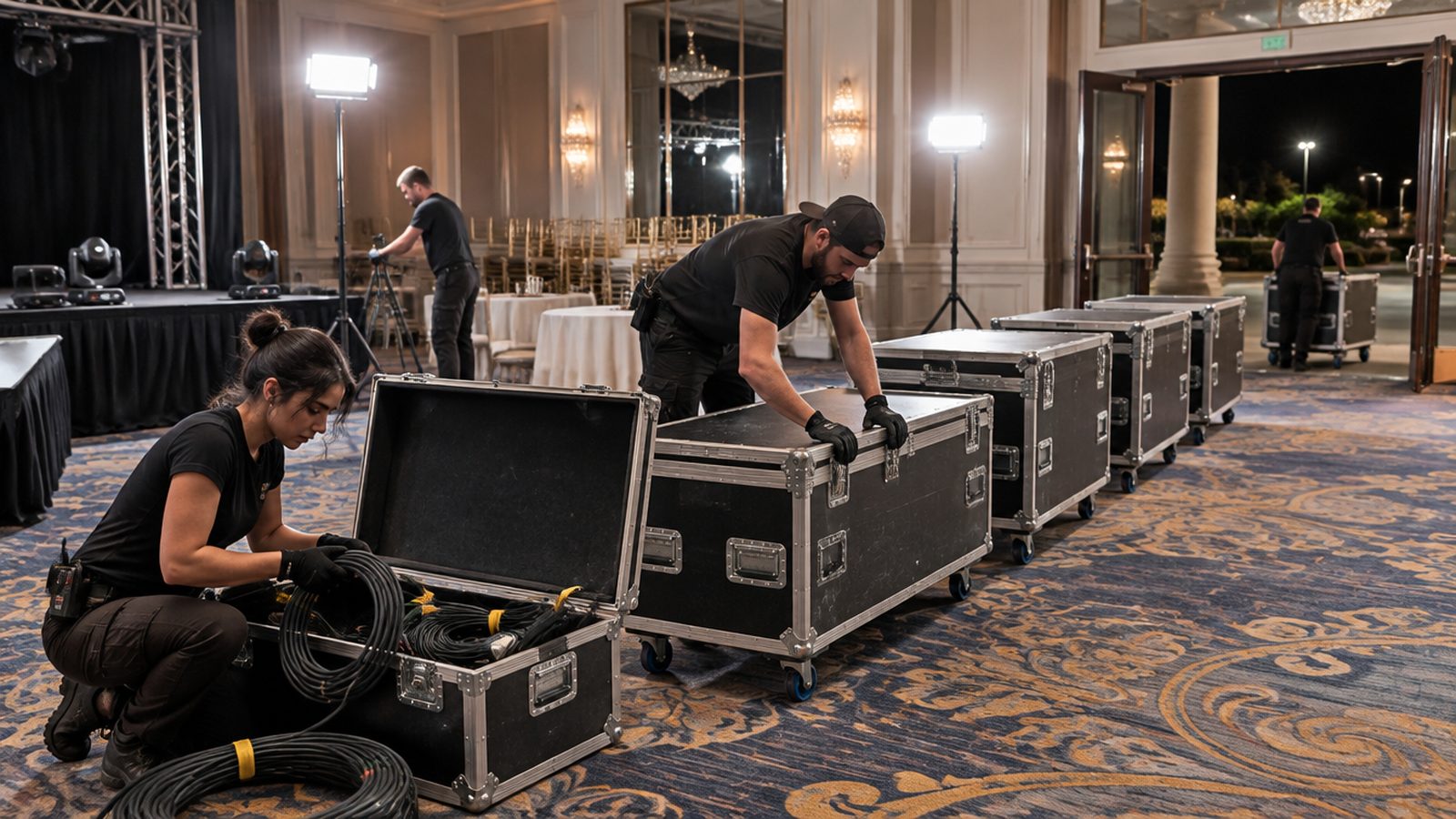
Load-out is when kit gets broken and left behind. Everyone is tired, it is late, and the venue wants the room. Go in order.
- Wait for the room. No strike while guests are still in the room unless the client asks for it.
- Power down in order. Speakers and amps off first, then processing, then the desk (Module 2).
- Batteries out, mics cased before anything else moves.
- Cables first. Unplug, coil over-under, tie, into the trunk (Module 12).
- Kit into its own case, lid on, latched. Never a loose item in someone else's case.
- Count back at the venue against the pick list (Module 14).
- Walk the room last. Under tables, behind curtains, on window sills, at the bar. Look for chargers, adaptors and gaffer tape rolls.
- Pack the truck to the layout, strap it, and sign out with the venue.
The last thing you do in the room is look at it empty.
08Back at the warehouse
The job is not finished when the truck parks. It is finished when the kit is ready for the next crew.
- Unload the same night or first thing
Kit left on a truck overnight is at risk and holds up the next job. - Count in against the pick list
Anything missing is reported with where it was last seen. - Faulty kit red-tagged
In the repair area with a note in the repair log. Not back on the shelf. - Batteries on charge
Rechargeables on the charger, used alkalines in the used box. - Wet or dirty kit dried and wiped
Open the cases. Never close a damp case. - Truck swept, fuelled and reported
Straps back on the rail. Any knock, noise or warning light told to the fleet person. - Job sheet handed in
With times, problems and anything the client said.
Leave the truck the way you want to find it at five in the morning.
09Check what you learnt
Ten questions. Pick an answer for each, then press Mark my answers. You need 8 out of 10 to pass this module. You can retry as often as you like.
Ten questions. Circle one answer for each. The answer key is on the last page. Pass mark: 8 out of 10.
Answer key
Photos: scene photographs are AI-generated illustrations and do not show B&W Productions equipment or events. This module is crew training, not a substitute for the manufacturer's manual, the venue's rules or the event safety officer's instructions.