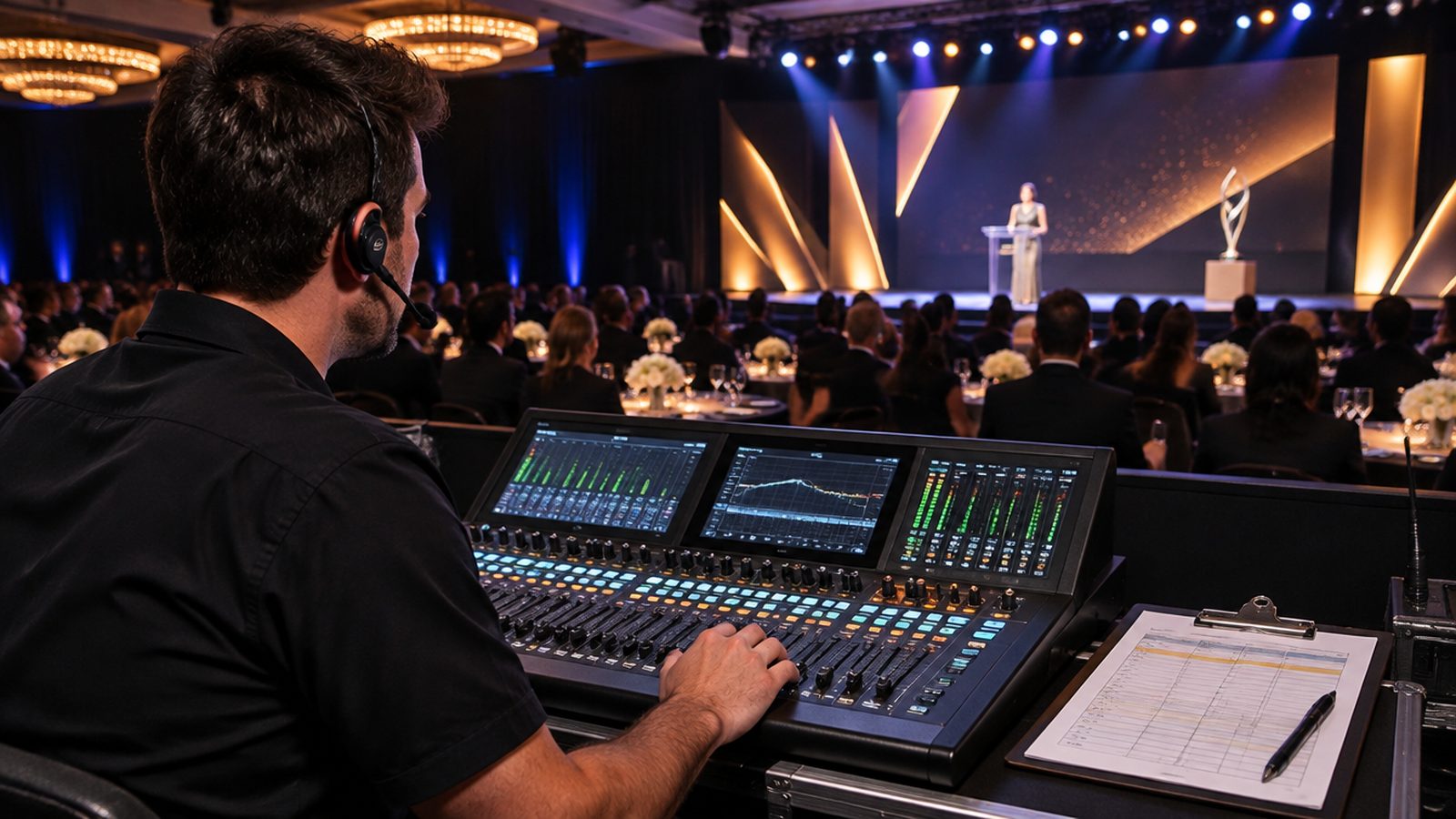
01Who is who on show day
| Role | Owns |
|---|---|
| Event manager / producer | The client, the timings, every decision that changes the plan |
| Show caller or crew chief | Calling cues, the crew, safety on the floor |
| Sound (FOH) | Everything the room hears: mics, playback, levels |
| Lights | House lights, stage looks, follow spots |
| Video / AV | Screens, slides, cameras, stream |
| Stage / floor | Handing mics, moving lecterns, getting people on and off |
| Runner | Fetching, batteries, messages. The most useful person in the room. |
On a small job one person wears three of these hats. The hats still exist. Know which one you are wearing when you make a call.
One boss per show. If two people give you different instructions, ask the crew chief. Do not pick the one you like.
02The crew briefing
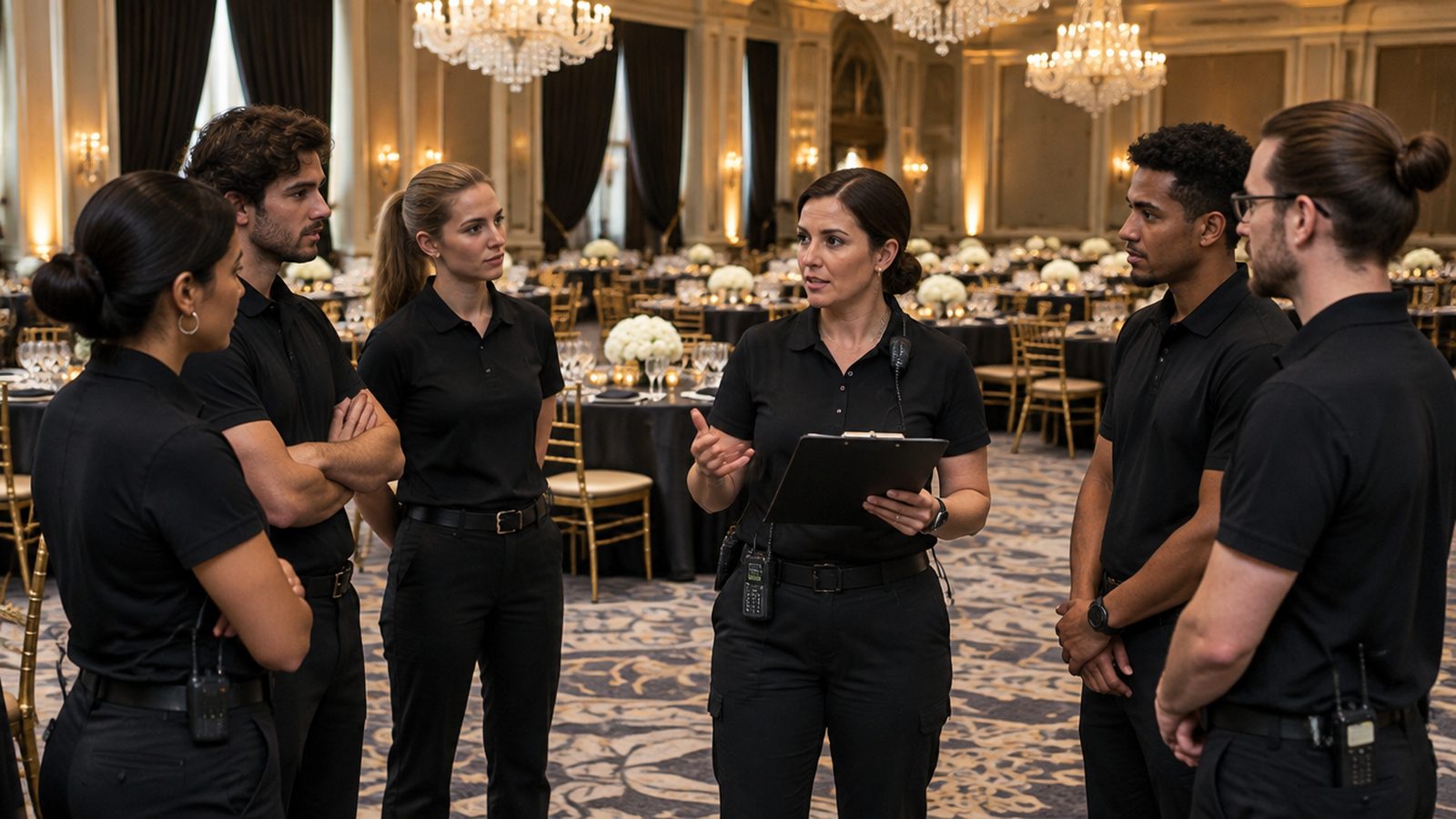
Every show starts with a briefing, even a three-person job. Ten minutes. Standing up. Phones away.
- The show: what it is, who the client is, what matters most to them tonight.
- The times: doors, start, breaks, finish, strike.
- The roles: who is on what, who covers breaks.
- The comms: which radio channel, who calls cues, hand signals for when comms fail.
- The risks: anything unusual. A late VIP, a surprise video, effects, weather.
- Safety: exits, first aid, who is the safety contact (Module 13).
- Questions. Ask now. Not during the CEO's speech.
If you missed the briefing, find the crew chief before you touch anything.
03The run sheet
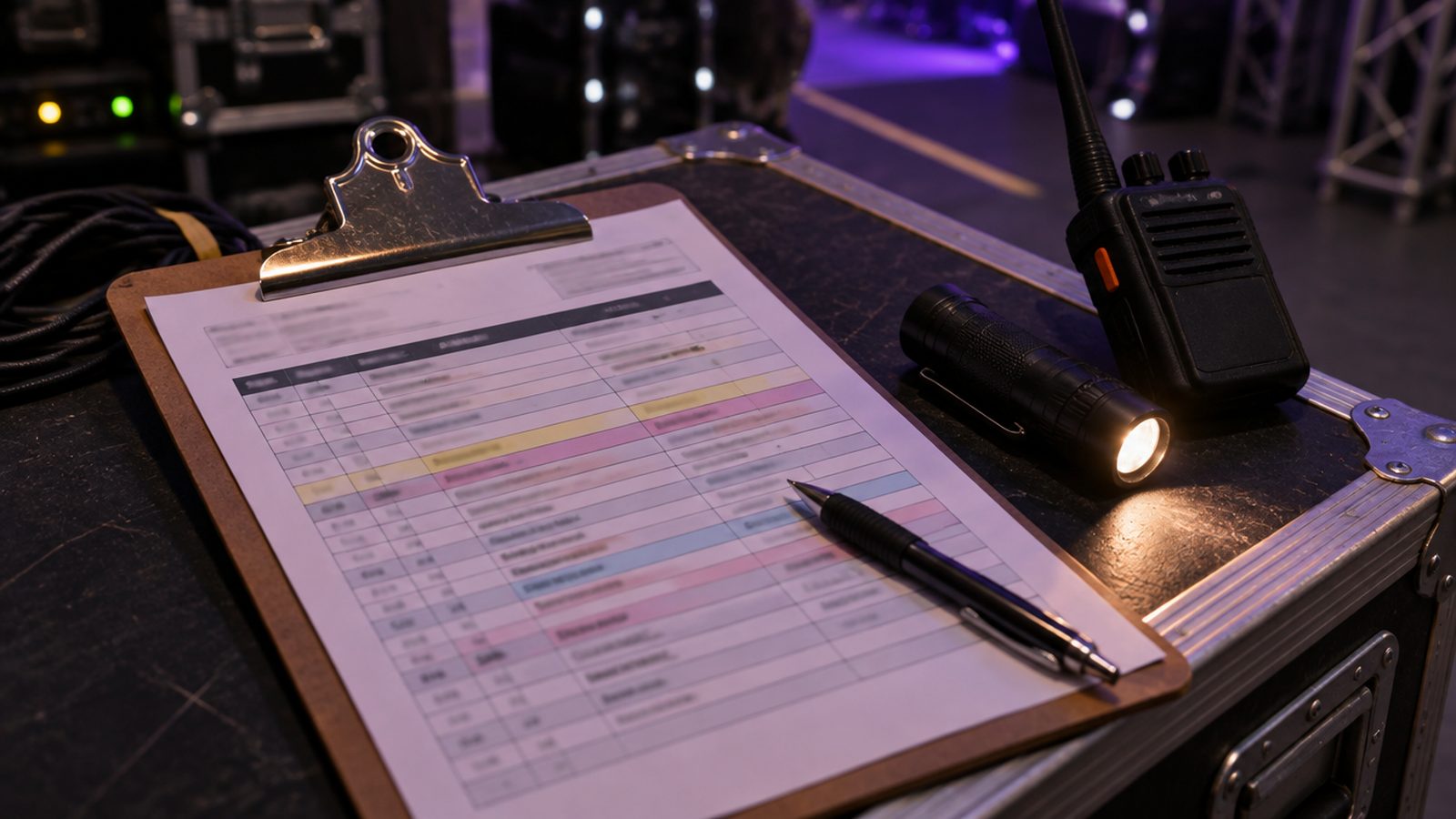
The run sheet is the show written down, one line for every moment. Time, what happens, who is on stage, and what sound, lights and video each do.
| Time | Item | Sound | Lights | Video |
|---|---|---|---|---|
| 18:00 | Doors, guests arrive | Background playlist, low | Warm wash, house at half | Holding logo |
| 18:40 | MC welcome | MC handheld up, music out | Stage up, house down | Event title slide |
| 18:45 | CEO speech | Lectern mic, headset standby | Lectern special | CEO slides, clicker live |
| 19:05 | Award 1 | Sting on cue, MC mic | Bump on the winner | Winner slide |
- One version. The latest version number is on every page. Old copies go in the bin.
- Mark it up. Highlight your own cues. Write mic numbers next to names.
- Changes go through the event manager, then to everyone, not just the person standing closest.
- Keep a torch and a pen. Phone screens light up your face in a dark room.
If it is not on the run sheet, it is a surprise. Surprises are the event manager's decision, not yours.
04Standby and go
A cue is an instruction to do one thing at one moment. Cues are called the same way every time so nobody has to think.
- On standby you stop talking. The channel belongs to the caller.
- You act on the word "go", not on the sentence before it.
- Never say "go" on comms unless you are calling a cue. Say "carry on" or "proceed".
- No caller? On small shows you take your own cues from the stage. Watch the MC, not your phone.
- Missed it? Do it now, cleanly, and move on. Do not explain on comms.
Standby: hands ready, mouth shut. Go: do it.
05Radio discipline
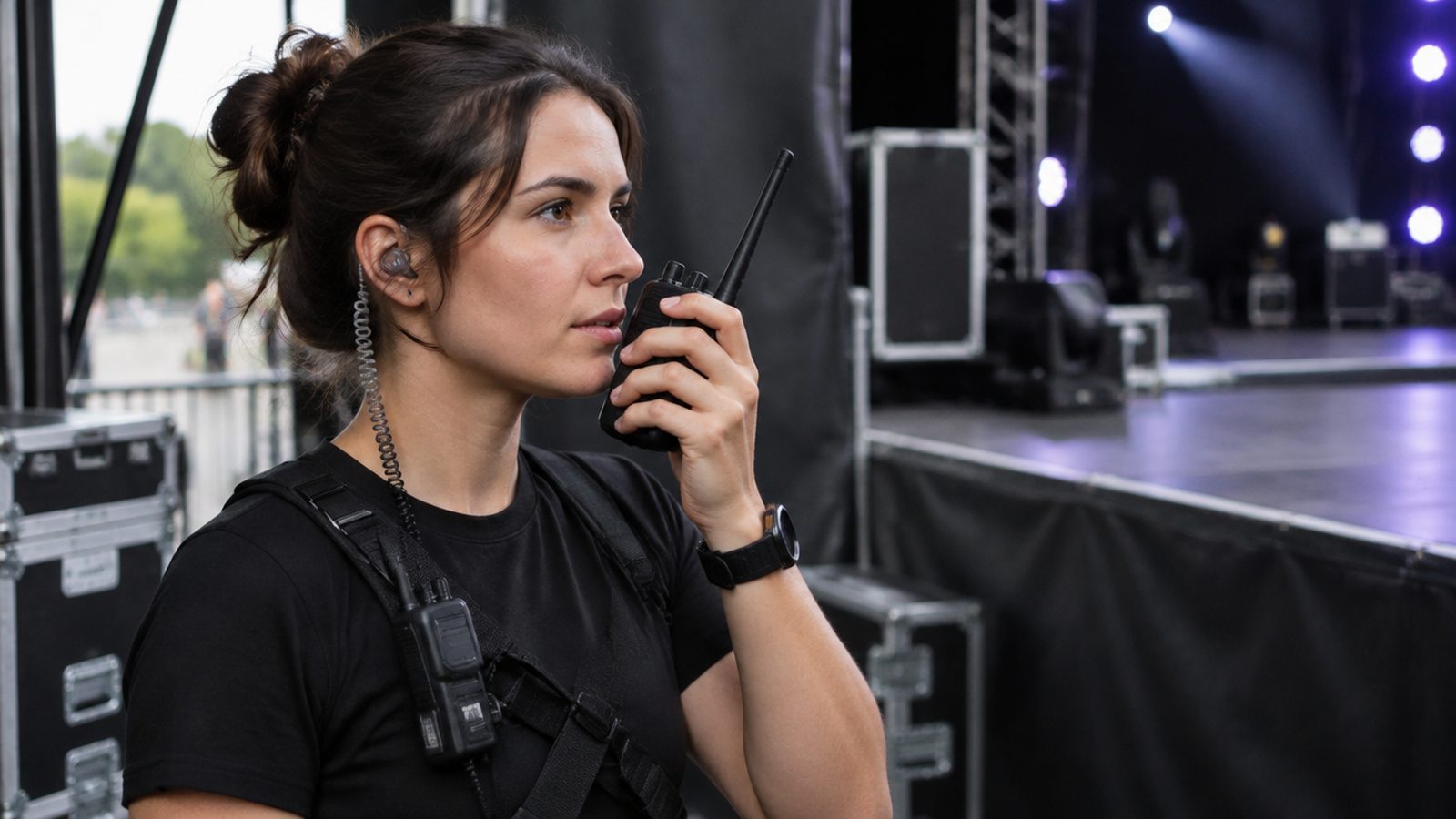
- Think first. Know what you will say before you press the button.
- Press, wait one second, then speak. The first word is lost if you talk as you press.
- Who you want, then who you are: "Sipho, Sipho, this is Thandi."
- Wait for "go ahead".
- Say it short. One message. What, where, what you need.
- Finish with "over" if you expect an answer, or "out" if you do not.
- Repeat back anything with a number, a name or a time.
| Say | It means |
|---|---|
| Go ahead | I am listening |
| Copy / copied | I heard and understood |
| Say again | Repeat your message |
| Stand by | Wait, I am busy |
| Negative / affirmative | No / yes |
| Radio check | Can you hear me? |
Try it: who do I tell, and what do I say?
Pick what has happened. The tool gives you who to tell and a short radio message.
The radio is not private. Guests, venue staff and the client can hear it. No names of guests, no jokes, no swearing, no complaints.
If it takes more than ten seconds to say, walk over and say it in person.
06How you look and act in the room
The client buys the show. What they remember is the crew. You are on show from the moment the first guest walks in.
Dress
Show blacks: clean black B&W shirt, black trousers, closed black shoes. Hi-vis and boots for build and strike.
Phones
In your pocket, on silent. No scrolling at the desk. The client sees a lit face in a dark room from across the hall.
Food and drink
Eat in the crew area, in your break. Water at the desk in a closed bottle. No alcohol on duty, even if the client offers.
Guests
Polite, short, helpful. "Let me find the right person for you." You do not take song requests or give out the wifi password.
The client
Friendly, but decisions go to the event manager. "I will get the event manager for you right now."
Quiet
During speeches you do not talk, laugh or move cases. If you must move, move slowly and low.
Act as if the client is standing behind you. Often they are.
07When it goes wrong
Something goes wrong on every show. The audience forgives a ten-second problem handled calmly. They remember panic.
- Have the spare ready before you need it. Second mic on, muted, at the side of the stage. Backup music on a second device.
- Do not run. Walk fast. Running tells the room something is wrong.
- Do not blame on comms. Fix it, report it, move on.
- Someone hurt or in danger: the show stops mattering. Call the crew chief and the venue, use the emergency numbers (Module 13).
- Tell the truth after. "Mic two died at 19:12, swapped in ten seconds, cause was a flat battery."
Calm is a skill. The crew copies whoever is calmest.
08Handover and debrief
The last ten minutes of the job decide whether the next one goes better.
- Thank the client contact
The event manager does this. Crew stay polite and keep working. - Radios back and counted
Batteries on charge, earpieces wiped. - Quick debrief
Five minutes: what worked, what broke, what to change. - Faults written down
Item, what happened, when. Into the repair log. - Run sheet and notes handed in
With real times and any client comments. - Venue signed out
Room checked with the duty manager, nothing left behind.
Say what went wrong while everyone still remembers. Tomorrow it is a rumour.
09Check what you learnt
Ten questions. Pick an answer for each, then press Mark my answers. You need 8 out of 10 to pass this module. You can retry as often as you like.
Ten questions. Circle one answer for each. The answer key is on the last page. Pass mark: 8 out of 10.
Answer key
Photos: scene photographs are AI-generated illustrations and do not show B&W Productions equipment or events. This module is crew training, not a substitute for the manufacturer's manual, the venue's rules or the event safety officer's instructions.