01The effects family
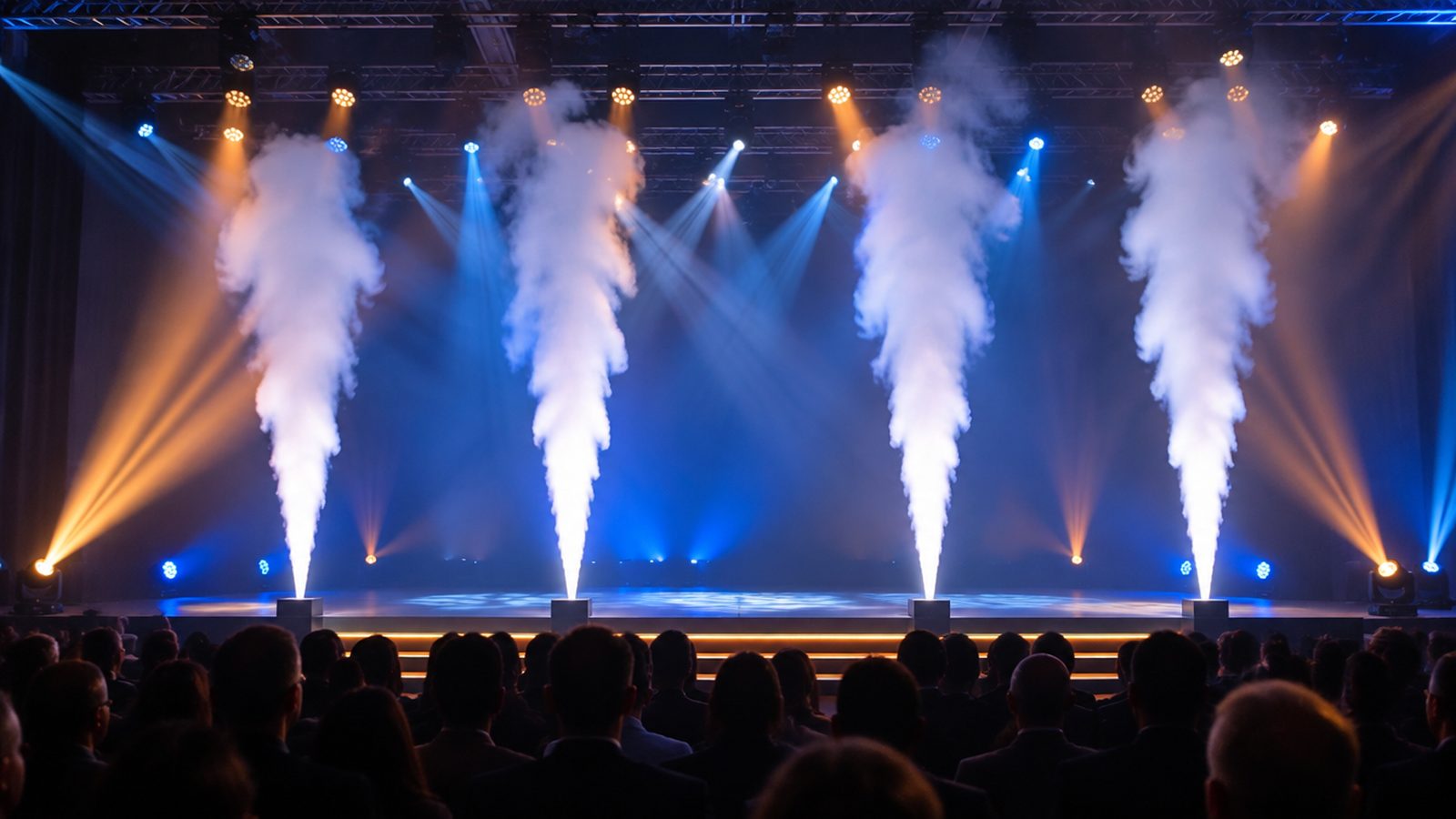
Atmosphere and special effects (SFX) come in a few types. They look similar from the audience. They are very different to run.
| Effect | What it is | Main risk |
|---|---|---|
| Haze | A thin, even mist that makes light beams visible. Runs all night at a low level. | Smoke detectors |
| Smoke / fog | Thick white bursts from heated fluid. Short hits. | Smoke detectors, hot nozzle, poor visibility |
| Low fog | Chilled fog or dry ice that hugs the floor. First dance, reveals. | Slippery floors, CO2 gas, cold burns |
| CO2 jets | A blast of freezing white gas from a cylinder. Gone in a second. | Cold burns, gas in low spaces, loud |
| Confetti / streamers | Paper or foil fired by air, CO2 or a spring. | Faces and eyes, slips, hot lights, clean-up |
| Cold spark machines | A fountain of sparks from metal granules. No fuse, no bang. | Ignition, burns, venue approval |
| Pyrotechnics | Anything with a fuse, flash powder or a bang. | Licensed pyrotechnician only |
B&W runs smoke machines and jet-style smoke units that look like CO2 jets but fire quick-clearing smoke. Treat them with the same clear zone as a real CO2 jet.
Pyrotechnics and fireworks are handled only by a licensed pyrotechnician with the permits in place. Crew never touch, move or fire them.
Know which effect it is before you plug it in. The name on the quote is not always what is in the case.
02Haze and smoke machines
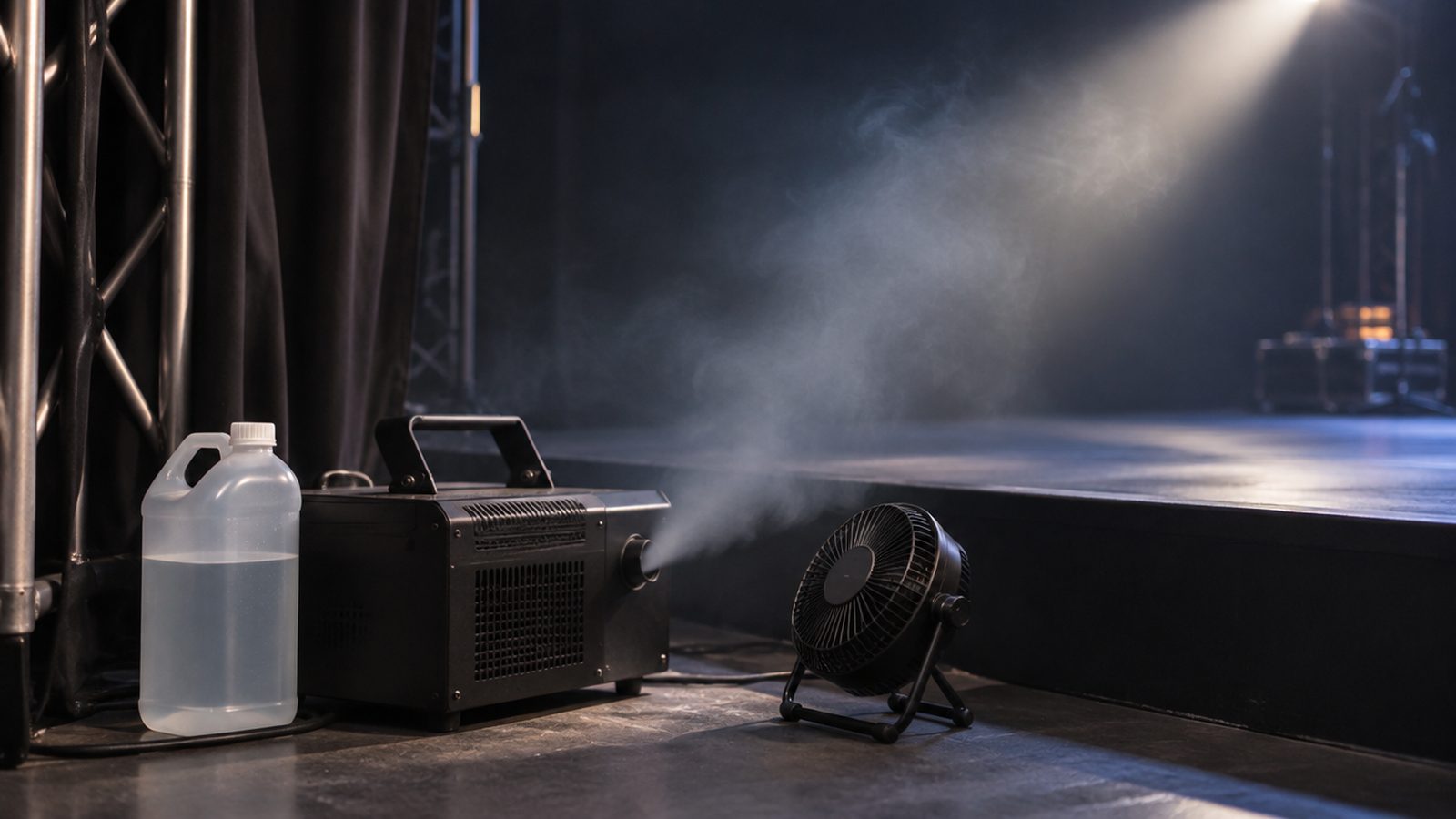
- Right fluid only. Use the fluid the maker specifies for that machine. Haze fluid in a smoke machine, or a cheap substitute, clogs the heater and can give off irritating fumes.
- Warm-up. Smoke machines need several minutes to heat. Switch on early. The nozzle stays hot long after.
- Level and stable. Fluid spills make a slippery floor. Wipe any drip at once.
- Clear the nozzle. Nothing within arm's length in front. Never aim at curtains, people or a detector.
- Less is more. Haze should be almost invisible until a beam hits it. If guests cough or cannot see the stage, it is too much.
- Use a fan to spread haze evenly instead of running the machine harder.
- After the show: run it clean as the manual says, cap the fluid, and let it cool before casing (Module 14).
If the audience notices the haze itself, turn it down.
03Smoke detectors and the venue
A smoke detector cannot tell haze from a fire. If it trips, the alarm sounds, the building may empty, the fire service may be called, and the client gets the bill.
- Ask in advance. The event manager gets approval for haze, smoke, CO2, confetti and sparks in writing, with times.
- Crew never cover, bag or disable a detector. That is the venue's decision and their fire panel.
- No approval, no effect. Not "just a little".
- Test early. A short test with the duty manager present, before guests arrive.
- Air conditioning matters. It pulls haze to return vents, where detectors often sit.
- Know the exits and what the alarm sounds like (Module 13).
The venue owns the fire panel. You own asking them early.
04CO2 jets, dry ice and low fog
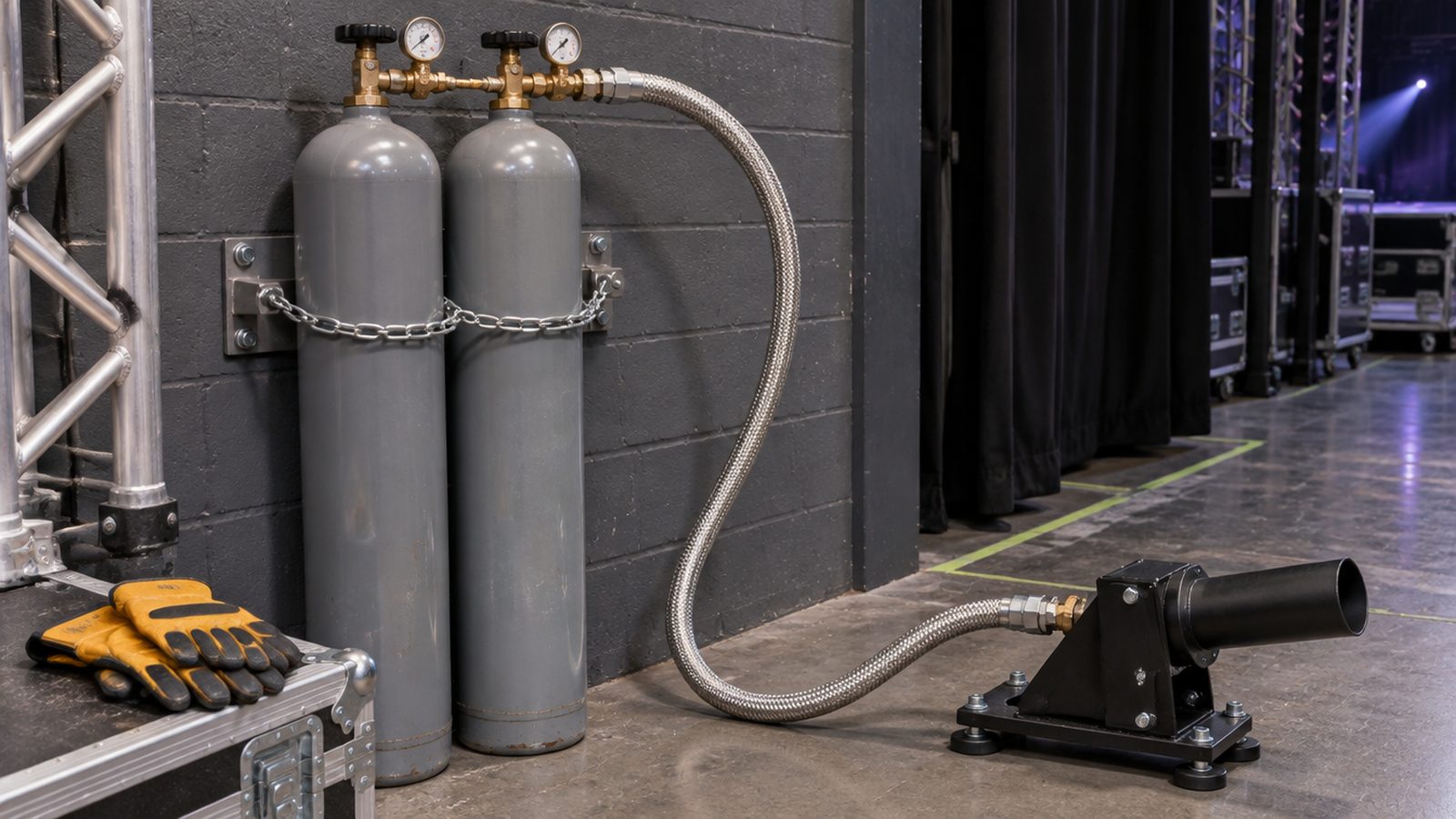
Real CO2 jets use liquid carbon dioxide under very high pressure. Dry ice is the same gas, frozen to about minus 78 degrees. Both look harmless. Both injure people.
Cylinders
Always upright and chained or strapped, in the trolley or to something fixed. Valve closed and cap on when moving. Never roll or drop one.
Hoses
High-pressure hose rated for CO2, hand-tightened then checked, with a safety cable at each end so a failed fitting cannot whip.
Cold burns
The gas and the nozzle freeze skin on contact. Insulated gloves and eye protection when connecting, handling dry ice or clearing a nozzle.
Breathing
CO2 is heavier than air and collects in low places: orchestra pits, basements, under stages. In a closed room it pushes the oxygen out. Ventilate.
Dry ice
Never in a sealed container, a closed van cab or a drinks cooler people will open. It builds pressure and gas.
Floors
Low fog leaves the floor damp. Warn the stage manager, mop after, and keep it off steps.
Headache, dizziness or fast breathing near CO2 kit means get out to fresh air and tell the crew chief. Do not go back in alone.
Upright, chained, gloved, ventilated. Four words for every cylinder.
05Confetti, streamers and cold sparks

Confetti and streamers
- Aim up and over. Never at faces. A cannon at close range hits like a thrown object.
- Flame-retardant paper near lights and effects. Foil confetti stays away from power, dimmers and open distros because it conducts.
- Agree the clean-up. Many venues charge a cleaning fee or ban confetti. The event manager settles this before the day.
- Slips. Confetti on a smooth dance floor or steps is slippery. Sweep the stage edge and steps straight after the hit.
- Load and arm last. Loaded cannons stay disarmed until the cue is near.
Cold spark machines
- They throw a fountain of sparks from metal granules. Cooler than fireworks, but still an ignition source.
- Venue approval in writing, the same as any flame effect.
- Clearance above and around as the maker's manual states. Nothing overhead that can catch: drapes, balloons, florals, low ceilings.
- Trained operator only, with the machine's own controller, and a fire extinguisher within reach.
- Granules stay dry and sealed. Empty the hopper after the show as the manual says.
If it flies, falls or sparks, the venue said yes on paper first.
06Clear zones and aiming
- Mark the zone. Tape on the floor. Tell the MC, the performers and the photographer where not to stand.
- Line of sight. The person pressing the button sees every nozzle. If you cannot see it, you do not fire it.
- Nozzles up and away from faces, cameras, screens, drapes and detectors.
- Cables and hoses taped down and out of walkways.
- Performers briefed. They know when and where it fires. A surprise jet next to a singer is an injury.
- Strobes: where strobe lighting is used, a warning sign goes at the entrance, and the flash rate is kept low. Four flashes a second or fewer is the usual guidance.
Eyes on the nozzle, finger on the button. Never one without the other.
07The pre-fire check
Run this before the show, and again in your head before each hit.
Try it: can I fire?
Tick what is true right now.
- One "no" is a no. The effect waits or is cut.
- The show caller calls effects like any cue: standby, then go (Module 17).
- The operator may refuse a "go" if the zone is not clear. Say "holding, zone not clear".
The operator has the last word. A missed effect is forgotten by the next song. An injury is not.
08Shutdown, storage and transport
- Disarm first
Controllers off, cannons unloaded or made safe. - Close valves, bleed lines
CO2 valve closed at the cylinder, line emptied through the jet, then disconnect with gloves on. - Cool down
Smoke and spark machines cool fully before casing. - Fluids capped, granules sealed
Wipe spills. Never transport a machine with an open tank. - Cylinders capped and secured
Upright and strapped in the vehicle, load bay ventilated, never in the cab. - Venue told
Duty manager knows effects are finished so detectors go back on. - Floor checked
Confetti off steps and stage edge, damp patches mopped. - Usage logged
Fluid and gas used, any fault, any near miss.
The effect is not over until the detectors are back on and the floor is dry.
09Check what you learnt
Ten questions. Pick an answer for each, then press Mark my answers. You need 8 out of 10 to pass this module. You can retry as often as you like.
Ten questions. Circle one answer for each. The answer key is on the last page. Pass mark: 8 out of 10.
Answer key
Photos: scene photographs are AI-generated illustrations and do not show B&W Productions equipment or events. This module is crew training, not a substitute for the manufacturer's manual, the venue's rules or the event safety officer's instructions.