Last updated: July 2026
The short answer
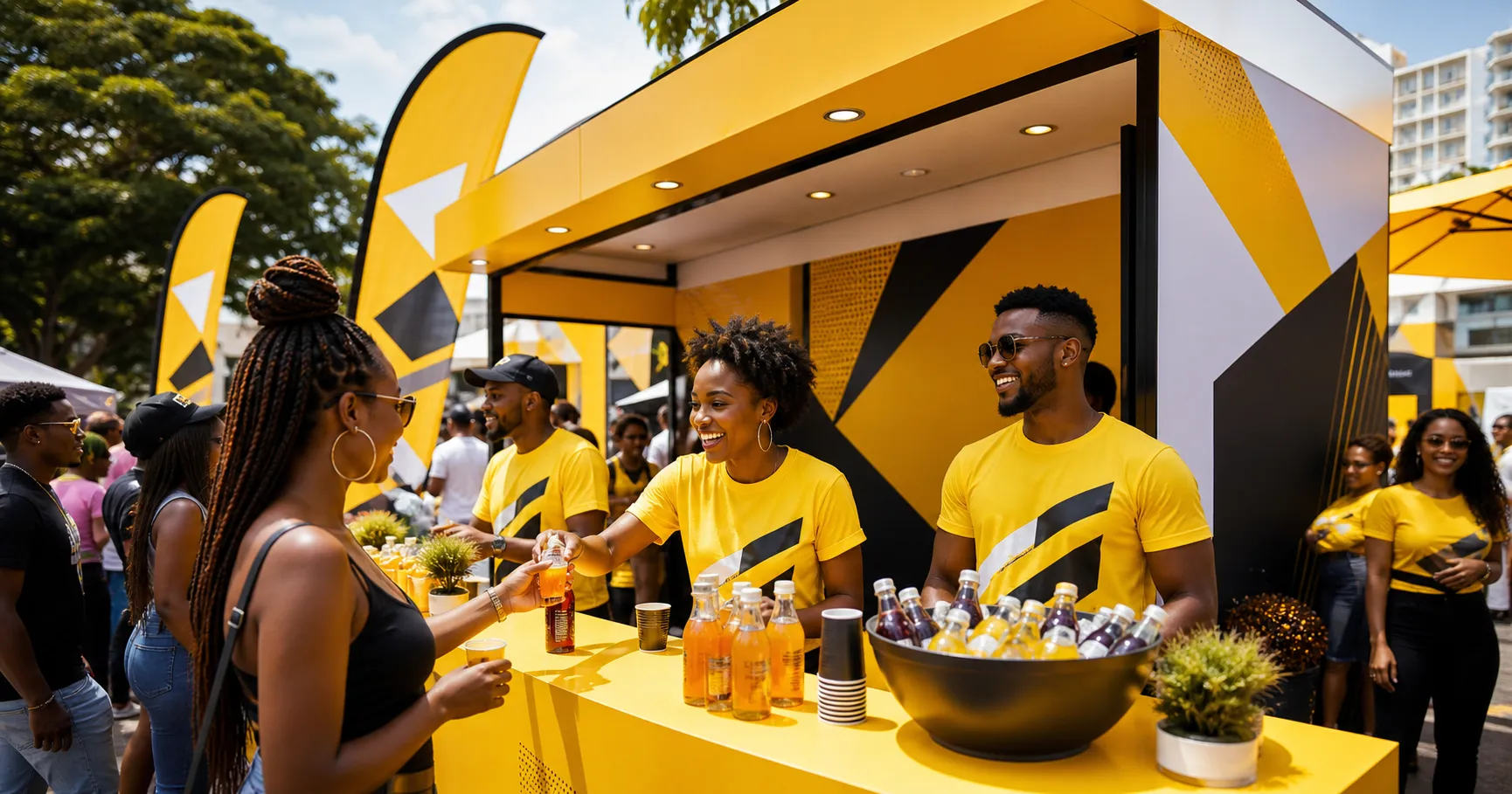
Brand activation in South Africa in 2026 costs from R18,000 for a single tavern activation to R4.5m+ for a large immersive build. National sampling runs R450k–R1.8m and a multi-town roadshow R850k–R2.4m. “Cost” is production; “spend” adds media and fees.
| Tavern activation (1 site, 4h) | R18k–R35k |
| Festival / concert stand | R280k–R950k |
| National sampling campaign | R450k–R1.8m |
| Roadshow (20 towns, 8 weeks) | R850k–R2.4m |
| Immersive experiential (Ice Bar-style) | R850k–R4.5m |
Brand activation is what we do. Since 1993, B&W Productions has delivered more than 150,000 brand executions for over 500 clients — and in all that time, I have never seen a South African agency publish what these campaigns actually cost. Brand managers are left comparing rand-denominated quotes against meaningless US dollar benchmarks. This guide fixes that: real 2026 cost bands, broken down by activation type and line item, with a downloadable template so you can build your own budget.
How to read this guide. Every figure carries a confidence label: HIGH (grounded in current market rates), MEDIUM (a realistic reconstruction or representative range), or LOW (genuinely variable or speculative). The case study numbers are an illustrative reconstruction from real cost bands, not a client’s actual invoice — we do not disclose client budgets.
Contents
- What brand activation actually costs in 2026
- Cost variance by activation type
- Line-item breakdown
- Regional variance: Gauteng vs Western Cape vs KZN
- What major FMCG brands typically spend
- Cheap activation red flags
- ROI benchmarks (read the confidence label)
- Case study: an Ice Bar-style immersive build
1. What Brand Activation Actually Costs in 2026
The first thing to settle is the difference between cost and spend, because conflating them is where most budget conversations go wrong.
- Cost is production: the physical delivery of the activation — staff, structures, branding, stock, transport, reporting. HIGH confidence
- Spend is the total campaign investment: production cost plus media (paid, digital, influencer) plus agency and concept fees. A R1m production can sit inside a R3m spend once media is layered on.
Everything in this guide is production cost unless stated otherwise. When you brief an activation, always confirm which number a quote refers to — a “R900k activation” means very different things depending on whether media is inside or outside that figure.
2. Cost Variance by Activation Type
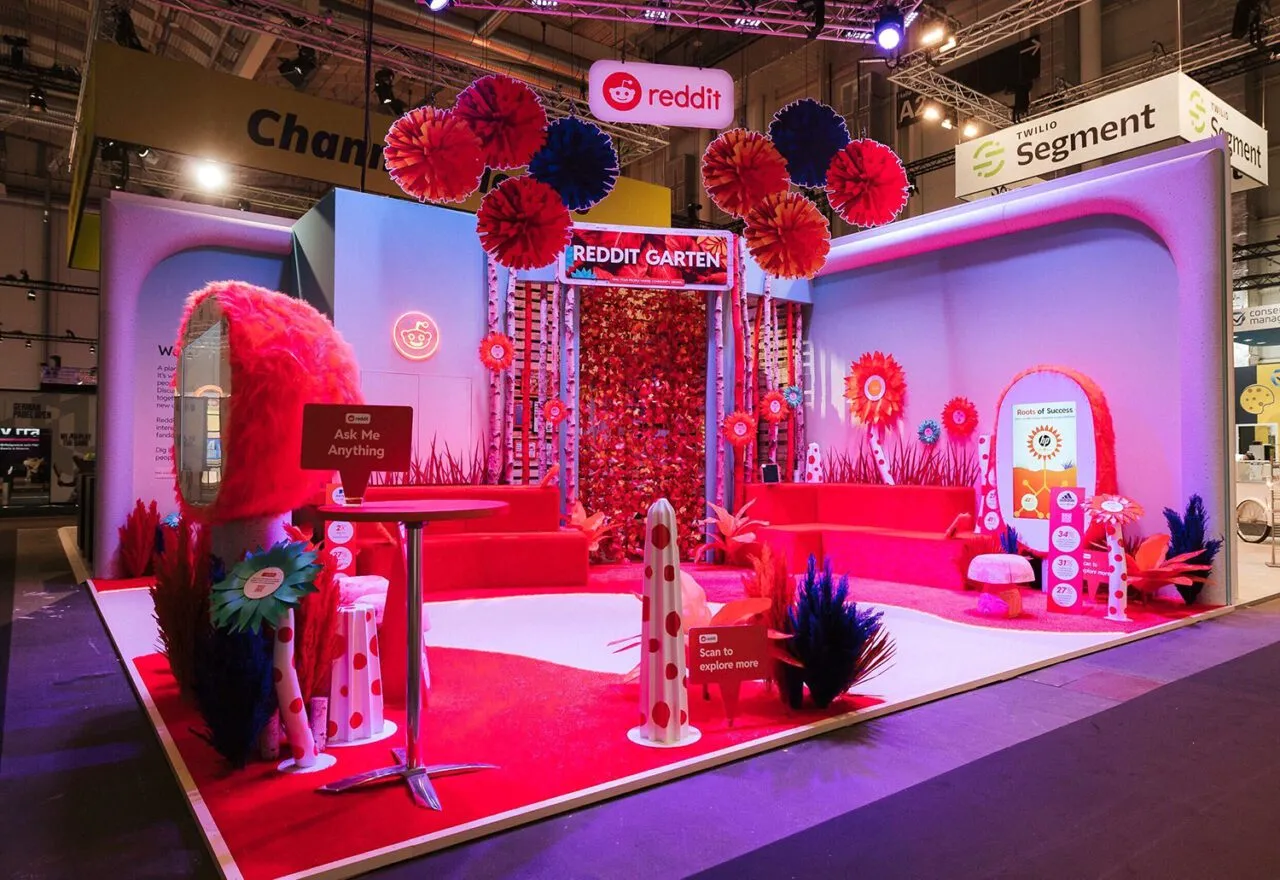
Activation cost is driven almost entirely by type, scale and duration. A four-hour tavern activation and an eight-week national roadshow are different species of project. Here are the 2026 production-cost bands for the five activation types we run most often.
| Activation type | 2026 cost band (ZAR) | What’s included |
|---|---|---|
| Tavern activation (single site, ~4 hours) | R18,000–R35,000 | Promoter team, branded gazebo & counter, sampling stock, giveaways, transport, basic reporting |
| Mall / retail activation (single site, 1–3 days) | R45,000–R180,000 | Mall site fee, stand, staffing, stock, branding, data capture |
| Festival / concert stand | R280,000–R950,000 | Festival participation fee, custom stand build, AV, staffing run, stock, branding |
| National sampling campaign | R450,000–R1,800,000 | Multi-site field team, stock at volume, logistics, management, full reporting |
| Roadshow (20 towns, 8 weeks) | R850,000–R2,400,000 | Mobile structures, crew, transport & accommodation, stock, branding, reporting |
| Immersive experiential (Ice Bar-style build) | R850,000–R4,500,000 | Custom structure, specialist engineering, AV, staffing run, permits, content |
The mall/retail band is added here for completeness; the other five are core activation categories. Note the enormous range within “immersive experiential” — a modest branded environment and a full refrigerated ice bar are both in that row, which is why a proper brief matters before anyone quotes.
What moves the number within a type
Two activations of the same type can differ by 3–4x in cost, and it is worth understanding why before you set a budget:
- Number of sites and duration: the single biggest driver. A 5-town sampling run and a 20-town roadshow are the same activity at very different scales.
- Custom build vs modular: a bespoke structure costs multiples of a modular, re-usable stand. If the brand doesn’t need a one-off build, don’t pay for one.
- Staffing ratio: the number of promoters per site, and their calibre, drives both cost and engagement quality.
- Stock and giveaway volume: sampling product and consumer premiums scale directly with footfall targets.
- Depth of reporting: a photo report costs far less than opted-in data capture with dashboards and post-campaign analysis.
When you brief an activation, be specific on these five variables. A vague brief produces a padded quote, because the provider prices in the uncertainty.
3. Line-Item Breakdown
Every activation, regardless of scale, breaks into the same line items. Understanding them is how you read a quote critically. Below is a fully worked single-site tavern activation totalling R26,585 — small enough to show every line, structured identically to how a R2m roadshow is costed.
| Line item | Detail | Cost (ZAR) |
|---|---|---|
| Promoter team | 4 promoters × R850 | R3,400 |
| Team leader | Brand ambassador / supervisor | R1,800 |
| Structures | Branded gazebo, counter & signage | R5,200 |
| Product | Sampling stock | R4,800 |
| Giveaways | Consumer premiums | R3,600 |
| Transport | Logistics to & from site | R2,400 |
| Reporting | Photo capture & report | R1,600 |
| Subtotal | R22,800 | |
| Management fee | 10% | R2,280 |
| Contingency | 6% | R1,505 |
| Total | R26,585 |
The same seven cost families — staffing, structures, branding, product, transport, permits/compliance, reporting — scale up to fill a multi-million-rand roadshow. Our downloadable ZAR budget template lays them all out so you can build your own; it opens directly in Google Sheets or Excel.
B&W vs a typical agency: where the mark-ups hide
The biggest structural difference between activation providers is whether production is in-house or sub-hired. When an agency sub-hires structures, staff and AV from third parties, each one usually carries a mark-up — and those stack. Because B&W’s core production is in-house, that layer largely disappears.
| Line item | In-house (B&W) | Typical sub-hire agency |
|---|---|---|
| Structures & build | At cost | Cost + 15–25% mark-up |
| Staffing | Directly managed teams | Agency-of-record + margin |
| AV & equipment | Owned / at cost | Sub-hired + mark-up |
| Management fee | Single transparent line | Sometimes hidden in item mark-ups |
| Quote transparency | Fully itemised | Often lump-sum |
4. Regional Variance: Gauteng vs Western Cape vs KZN
Gauteng is the baseline for activation pricing — it holds the deepest pool of crew, structures and stock suppliers, so competition keeps rates keen. Other regions adjust from there, mostly through travel and logistics.
| Region | Cost index | What drives it |
|---|---|---|
| Gauteng | 100 (baseline) | Deepest supplier pool; most activation crew based here |
| KwaZulu-Natal | ~108 | Some crew & structures travel from Gauteng |
| Western Cape | ~115 | Travel & accommodation for national crew; peak-season demand |
| Other provinces | 110–125 | Distance from supply hubs; transport & overnight costs |
For a genuinely national campaign, regional variance is usually a small percentage of the total — the logistics of moving between regions matter more than the base rate in any one of them. Most of our activation crew and structures are Gauteng-based; see our Johannesburg base for how that supports national roll-outs.
5. What Major FMCG Brands Typically Spend
Large FMCG advertisers — the beverage, alcohol and personal-care brands that dominate South African activation — spread their annual activation investment across a portfolio: always-on tavern and retail programmes, a handful of festival and concert stands, and one or two flagship experiential builds a year.
Speaking in aggregated, non-client-specific terms MEDIUM confidence: an always-on tavern programme across many sites runs into the low millions per year in production cost; a flagship experiential build is a single seven-figure line; and festival stands sit in the mid-six-figure range each. We never disclose individual client budgets — these are category-level patterns, not any one brand’s numbers.
The strategic point for a brand manager: activation spend is a portfolio decision. The right question is rarely “what does one activation cost?” but “how do we split the annual activation budget across always-on presence and flagship moments?”
6. Cheap Activation Red Flags
A quote that comes in well below the others is almost never a saving — it is a scoping gap that reappears later. The specific warning signs in activation work:
- Under-scoped staffing: too few promoters for the expected footfall means poor consumer engagement and wasted stock. HIGH
- Vague structure specs: “branded stand” with no dimensions, materials or build detail invites a downgrade on the day.
- Stock excluded: sampling product quietly left out of the quote, to be billed later.
- No permit or compliance line: municipal permits, site fees and safety officers are real costs; their absence signals a quote that will grow.
- Reporting as an “optional extra”: if you can’t measure it, you can’t justify the next one. Reporting should be in the core scope.
The defence is the same as for any event: compare quotes on identical scope, and ask the direct question — “what is not included here?”
7. ROI Benchmarks (Read the Confidence Label)
LOW confidence Activation ROI is the most over-claimed number in the industry. The honest position: return depends so heavily on category, objective, execution quality and measurement method that any single “activations return Rx for every R1” figure should be treated with deep scepticism. We will not print one, because we cannot stand behind it as a general rule.
What a well-executed activation can be measured on, honestly:
- Reach: consumers engaged and samples distributed (directly countable).
- Conversion: sampling-to-purchase rate in the activation window.
- Data: opted-in consumer records captured (POPIA-compliant, with consent).
- Sales uplift: measured against a control period or region.
- Earned content: social reach and user-generated content generated.
The single most important ROI decision happens before the campaign: agree the success metrics and the measurement method upfront. An activation measured properly against a clear objective is worth far more to your next budget conversation than one justified by a borrowed ROI multiple.
8. Case Study: an Ice Bar-Style Immersive Build
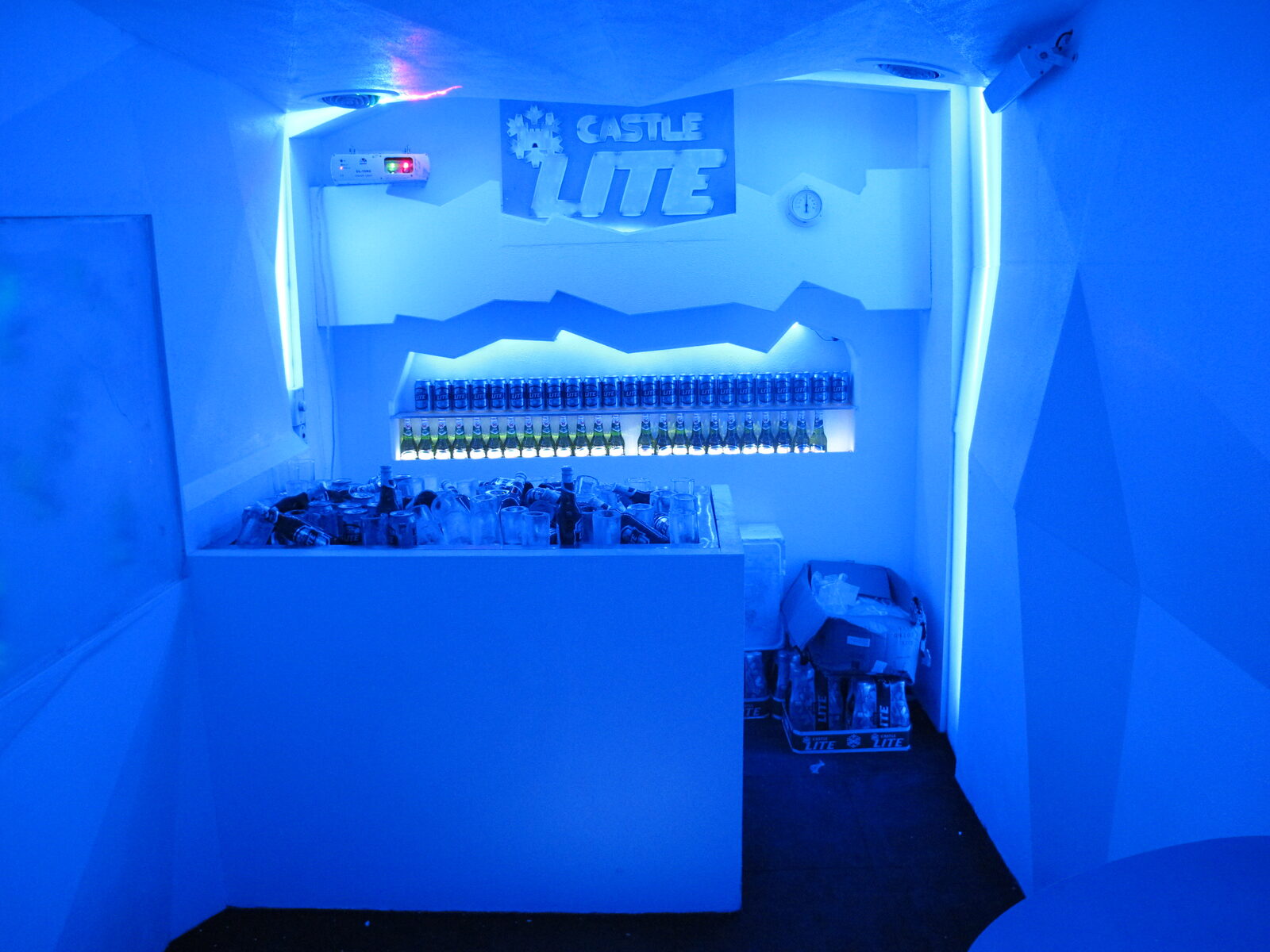
B&W’s Castle Lite Ice Bar is one of our best-known experiential projects. Client budgets are confidential, so the breakdown below is an illustrative reconstruction of what a build of that type and scale costs in 2026, using the same line-item method as the rest of this guide. MEDIUM confidence — representative, not an actual invoice
| Line item | Cost (ZAR) |
|---|---|
| Custom structure design & build | R640,000 |
| Refrigeration / specialist engineering | R360,000 |
| AV, lighting & sound | R295,000 |
| Branding, print & signage | R230,000 |
| Staffing over the activation run | R340,000 |
| Product, bar stock & consumables | R185,000 |
| Transport, install & de-rig | R155,000 |
| Permits, safety & compliance | R82,000 |
| Content capture & reporting | R105,000 |
| Subtotal | R2,392,000 |
| Management fee (9%) | R215,280 |
| Contingency (8%) | R208,582 |
| Total production cost | R2,815,862 |
Two things stand out. First, the structure and specialist engineering together are roughly 40% of the build — immersive experiential is fundamentally a construction project with a brand wrapped around it. Second, this is production cost only; the media campaign that drove footfall to the Ice Bar would sit on top as spend. See more of our experiential work on the work page.
Key takeaways
- Activation production cost spans R18k (single tavern) to R4.5m+ (large immersive build) in 2026.
- Always separate “cost” (production) from “spend” (production + media + fees) when reading a quote.
- In-house production avoids the stacked sub-hire mark-ups a typical agency model carries.
- Treat any single activation ROI multiple as low-confidence — agree measurable metrics upfront instead.
- Compare quotes on identical scope; a dramatically cheaper one is a scoping gap, not a saving.
Frequently Asked Questions
How much does a brand activation cost in South Africa in 2026?
Brand activation costs in South Africa in 2026 range from about R18,000 for a single-site tavern activation to R4.5m+ for a large immersive experiential build. A national sampling campaign typically costs R450,000–R1.8m, a multi-town roadshow R850,000–R2.4m, and a branded stand at a major festival R280,000–R950,000. The figure depends on activation type, scale, duration and number of sites.
What is the difference between activation cost and activation spend?
Cost refers to production only — the physical delivery of the activation: staff, structures, branding, stock, transport and reporting. Spend is the total campaign investment: production cost plus media (paid promotion, influencer, digital) plus agency and concept fees. A R1m production cost can sit inside a R3m campaign spend once media is added. Always confirm which figure a quote refers to.
How much does a tavern activation cost?
A single-site tavern activation running about four hours costs R18,000–R35,000 in 2026, depending on the size of the promoter team, the branding footprint and the volume of sampling stock and giveaways. Multi-site tavern programmes are priced per site with volume efficiencies as the number of sites rises.
How much does a national sampling campaign cost?
A national sampling campaign in South Africa typically costs R450,000–R1.8m in 2026. The main drivers are the number of sites and cities, campaign duration, the size of the field team, stock volumes and the depth of data capture and reporting required.
How much does a roadshow activation cost?
A multi-town roadshow — for example 20 towns over eight weeks — costs R850,000–R2.4m in 2026. Transport, accommodation, crew, mobile structures and the sheer logistics of moving an activation across the country are the biggest cost drivers.
How much does an immersive experiential activation cost?
A large immersive experiential activation — a custom-built branded environment such as an ice bar — costs R850,000–R4.5m in 2026. Custom structure design and build, specialist engineering, AV and a full staffing run over the activation period are the major costs.
How much does a branded stand at a festival cost?
A corporate or brand stand at a major South African festival (such as Ultra SA or Rocking the Daisies) costs R280,000–R950,000 in 2026, covering the stand build, branding, AV, staffing, stock and the festival site fee. The festival’s own participation fee is a significant and variable component.
What line items make up a brand activation budget?
The core line items are: staffing (promoters, team leaders, an activation manager), structures (stand or custom build, furniture), branding (print, signage, vehicle branding), product (sampling stock, giveaways), AV, transport and logistics, install and de-rig, permits and site fees, safety and compliance, and content capture and reporting. A management fee and a contingency are added on top.
Are brand activations more expensive in Cape Town than Johannesburg?
Yes, marginally. Gauteng is the baseline because it has the deepest pool of activation crew, structures and stock suppliers. The Western Cape typically runs slightly higher due to travel and accommodation for national crew and equipment, and KwaZulu-Natal sits between the two. For a national campaign, regional variance is usually a small percentage of total budget.
How do I spot a cheap brand activation quote that will cost more later?
Watch for under-scoped staffing (too few promoters for the footfall), vague structure specifications, sampling stock excluded from the quote, no line for permits or compliance, and reporting treated as an optional extra. A quote that is dramatically lower than others is almost always missing scope that reappears as variation orders once the campaign is committed.
What ROI does a brand activation deliver?
This varies enormously by category, execution and measurement method, so any single figure should be treated with low confidence. Well-executed activations are measured on reach, sampling conversion, data captured, sales uplift in the activation window, and earned social content — not a single ROI multiple. Agree the success metrics and measurement method before the campaign, not after.
Does B&W Productions share activation pricing upfront?
Yes. B&W quotes activations on transparent, itemised pricing so brand managers can see exactly what each line costs. Because core production is handled in-house rather than sub-hired, there are no stacked mark-ups on external suppliers. Request an itemised proposal via the contact page.
Build Your Activation Budget With Real Numbers
Start with our free ZAR budget template (opens in Google Sheets or Excel), read how we approach experiential events and activations, and see the work on our portfolio. When you’re ready for an itemised, transparent proposal with no hidden sub-hire mark-ups, get in touch — B&W Productions has delivered 150,000+ brand executions since 1993.