TL;DR
Planning a corporate event in South Africa follows 10 steps — from defining objectives and setting the budget through venue selection, supplier booking, run-of-show design and post-event ROI measurement. This guide walks through each step with timelines and practical tips.
Key Takeaways
- Start with a single clear objective and a locked guest count — every cost flows from these two decisions.
- Allow 12–16 weeks for a medium corporate event; 6+ months for a large conference or gala.
- Lock core suppliers (caterer, AV, entertainment) at least 10–12 weeks before the event date.
- A full-service event management company handles all 10 steps and typically negotiates better supplier rates.
Planning a corporate event that actually achieves its objectives — not just “goes well” — requires a structured process. After producing over 10,000 events since 1993, B&W Productions has refined that process into 10 clear steps that apply to every corporate event, from a 40-person product launch to a 2,000-delegate national conference.
Step 1: Define Objectives and KPIs
Every corporate event exists to achieve something: launch a product, reward a team, align a strategy, build client relationships, or raise brand awareness. Before you discuss venues, budgets or themes, write down the single most important outcome you need from this event. Then define 2–3 measurable KPIs that will tell you whether you achieved it: attendance rate, Net Promoter Score, leads generated, media coverage, or a post-event survey result. An event without a clear objective is a party with a purchase order.

Step 2: Set the Budget
Work backwards from your objective. A brand-building gala dinner for 200 key clients requires a different investment than a training workshop for 50 internal staff. Typical corporate event budget allocation in South Africa:
- Venue & catering: 40–50%
- AV, staging & production: 15–25%
- Entertainment: 10–15%
- Décor & branding: 5–10%
- Event management fees: 5–10%
- Contingency: 10% (non-negotiable)
Always build in a 10% contingency. Events generate surprises; a contingency budget is the difference between absorbing them gracefully and scrambling.
Step 3: Choose the Format
The format should serve the objective. Common corporate event formats and what they’re best at:
- Gala dinner: client appreciation, awards, brand storytelling
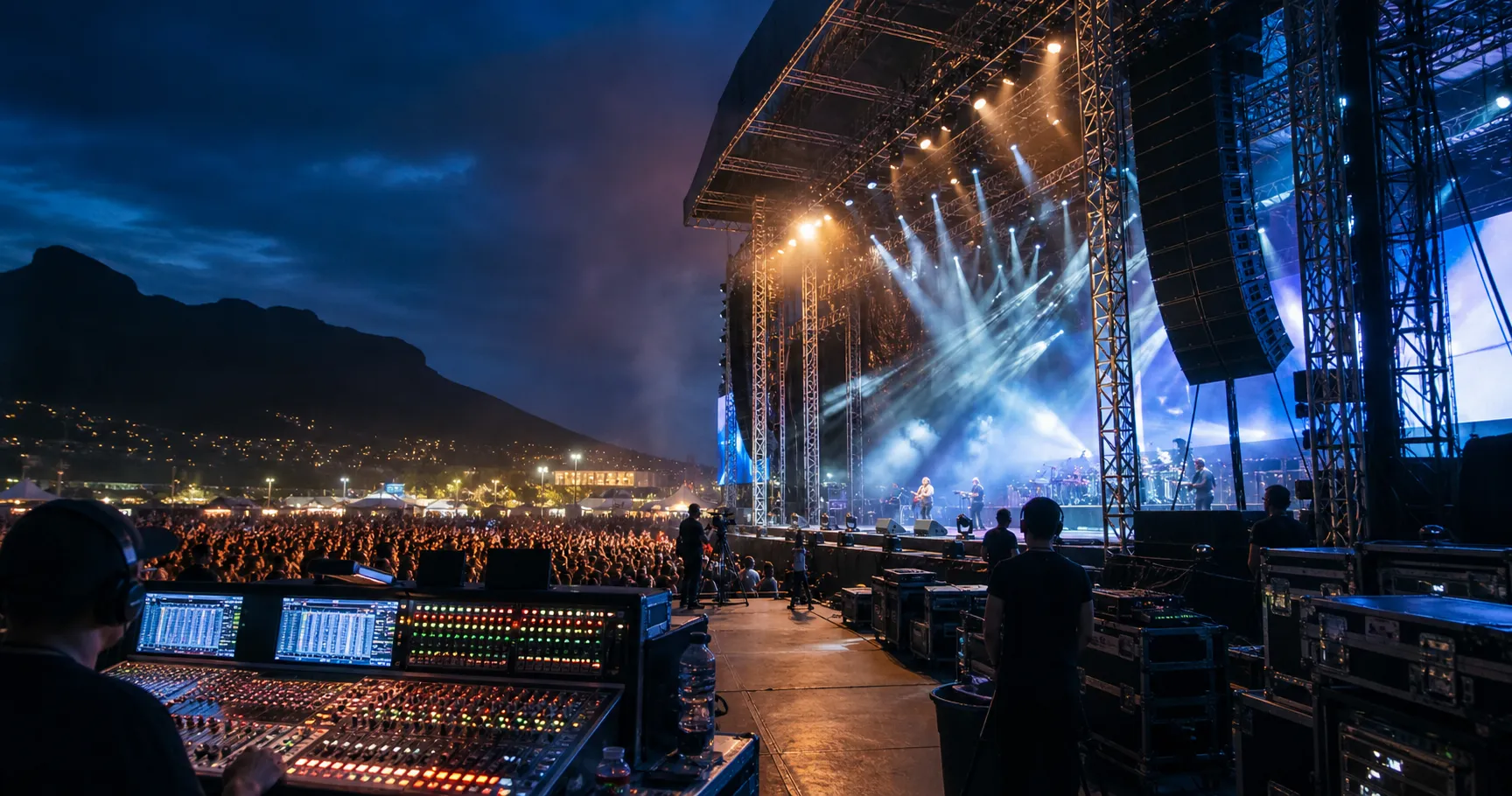
- Conference: knowledge transfer, industry positioning, networking
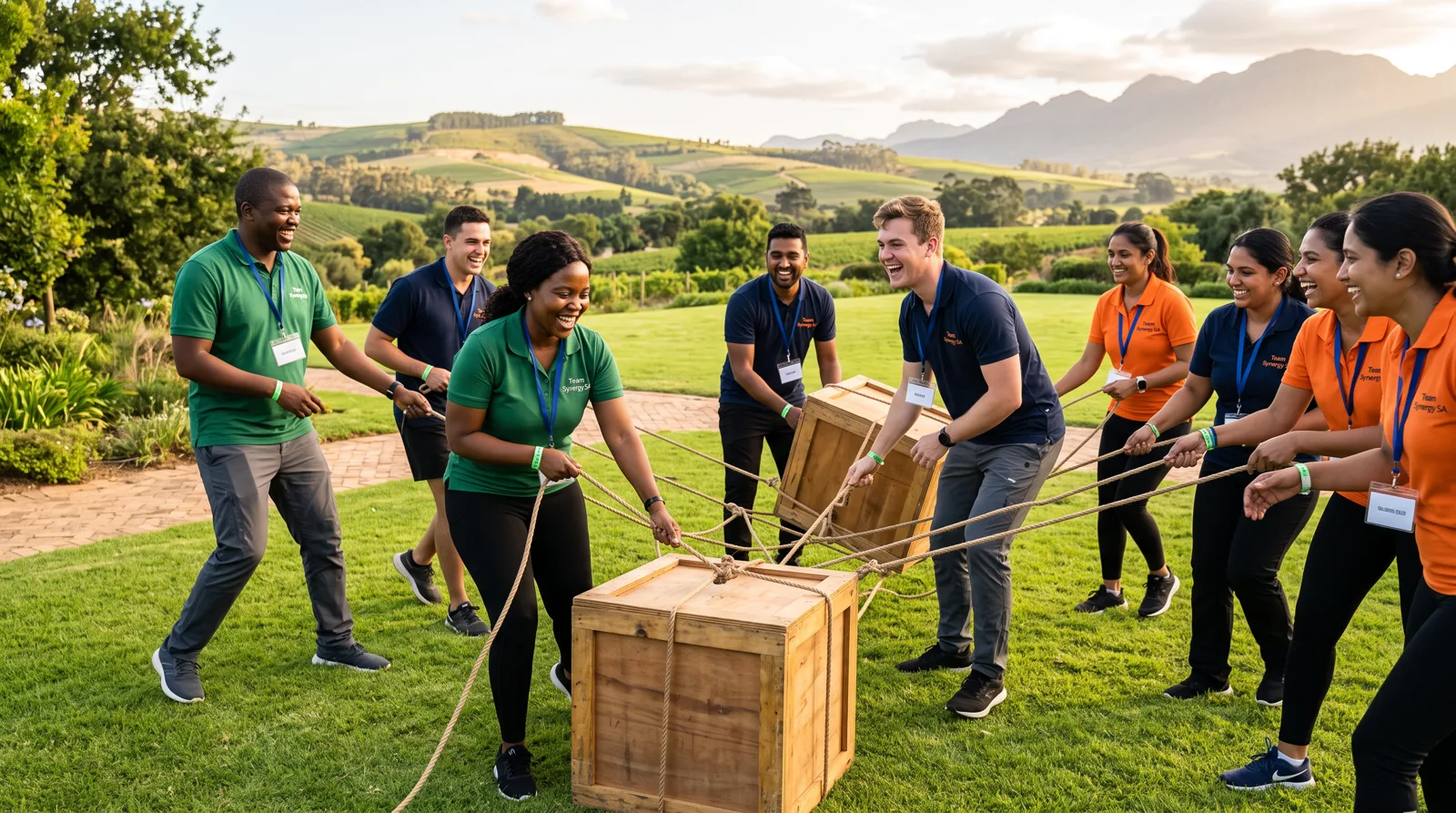
- Team-building day: internal alignment, culture building
- Product launch: market introduction, media coverage, dealer/channel activation
- Cocktail function: networking, announcements, celebrations (cost-effective for large numbers)
- Year-end function: team recognition, morale, retention signalling
Step 4: Select a Venue
Match the venue to the format, not the other way round. A product launch needs a blank-canvas space you can brand. A gala dinner needs a room with architectural drama. A conference needs built-in AV and breakout rooms. Shortlist three venues, conduct site visits, and compare on: capacity in your required layout, AV inclusions, catering flexibility, parking, and plan-B for weather if there’s an outdoor component.
In Gauteng, Sandton and Rosebank suit corporate cocktails and dinners; Centurion and Midrand suit conferences; the Muldersdrift corridor suits destination-style events. See our JHB venue guide or Pretoria venue guide for specifics.
Step 5: Book Suppliers
Lock in your core suppliers 10–12 weeks out: caterer (or confirm in-house), AV and staging company, entertainment (DJ, band, MC, speakers), photographer/videographer, and décor/florist. Get written quotes, not verbal estimates. Confirm cancellation terms before signing. A full-service event management company handles this entire step — and typically negotiates better rates than a client booking directly, because of volume relationships.
Step 6: Build the Run-of-Show
The run-of-show is the minute-by-minute script for the event: arrival and registration, welcome drink timing, speeches, entertainment sets, meal service, transitions, and close. A well-built run-of-show prevents dead time, keeps energy levels right, and gives every supplier a shared timeline to work from. This is the single most undervalued planning document in corporate events — and the one that separates a polished event from a chaotic one.
Step 7: Invitations and RSVP Management
Send save-the-dates 8 weeks out, formal invitations 6 weeks out, and set the RSVP deadline at 3 weeks before the event. Use a digital RSVP system that captures dietary requirements, accessibility needs and plus-one confirmations in one step. Chase non-responders at the 2-week mark — politely, but chase. Your caterer, venue and budget all depend on an accurate headcount.
Step 8: Finalise Logistics
The operational details that make or break the guest experience: transport and parking plans, signage and wayfinding, registration and check-in process, cloakroom, weather contingency, power requirements (especially for outdoor or off-grid venues), and accessibility provisions. If any element requires municipal permits — road closures, noise exemptions, liquor licensing — start the application process at least 6 weeks out.
Step 9: Execute
On the day, the event management team runs the show. The client should be a guest, not the project manager. Key execution disciplines: a pre-event briefing with all suppliers (ideally the day before or early on the day), a single point of contact for all supplier queries (the event manager, not the client), real-time run-of-show management, and a contingency protocol for the top 5 things that could go wrong.
Step 10: Debrief and Measure ROI
Within a week of the event, run a structured debrief: what worked, what didn’t, and what would you change. Send a post-event survey to attendees. Measure your results against the KPIs you defined in Step 1. Report the outcome to the stakeholders who approved the budget — this is how you justify the next event. The best corporate event planners treat every event as a data point, not a standalone experience.
Planning Timeline
- 16–20 weeks out: objectives, budget, format, venue shortlist
- 12 weeks: venue confirmed, suppliers booked, run-of-show drafted
- 8 weeks: save-the-dates sent, décor and branding brief finalised
- 6 weeks: formal invitations, menu sign-off, entertainment confirmed
- 4 weeks: logistics plan locked, permits submitted
- 3 weeks: RSVP deadline, final numbers to venue
- 2 weeks: seating plan, transport bookings, run-of-show finalised
- 1 week: site visit, final headcount, weather plan-B confirmed
- Day-of: supplier briefing, execution, contingency management
- 1 week after: debrief, survey, ROI reporting
Need Help?
B&W Productions manages the entire 10-step process for corporate clients across South Africa. From brief to breakdown, we handle venue sourcing, supplier procurement, production, staffing and day-of execution — so your team focuses on being there, not running the show. Request a proposal.