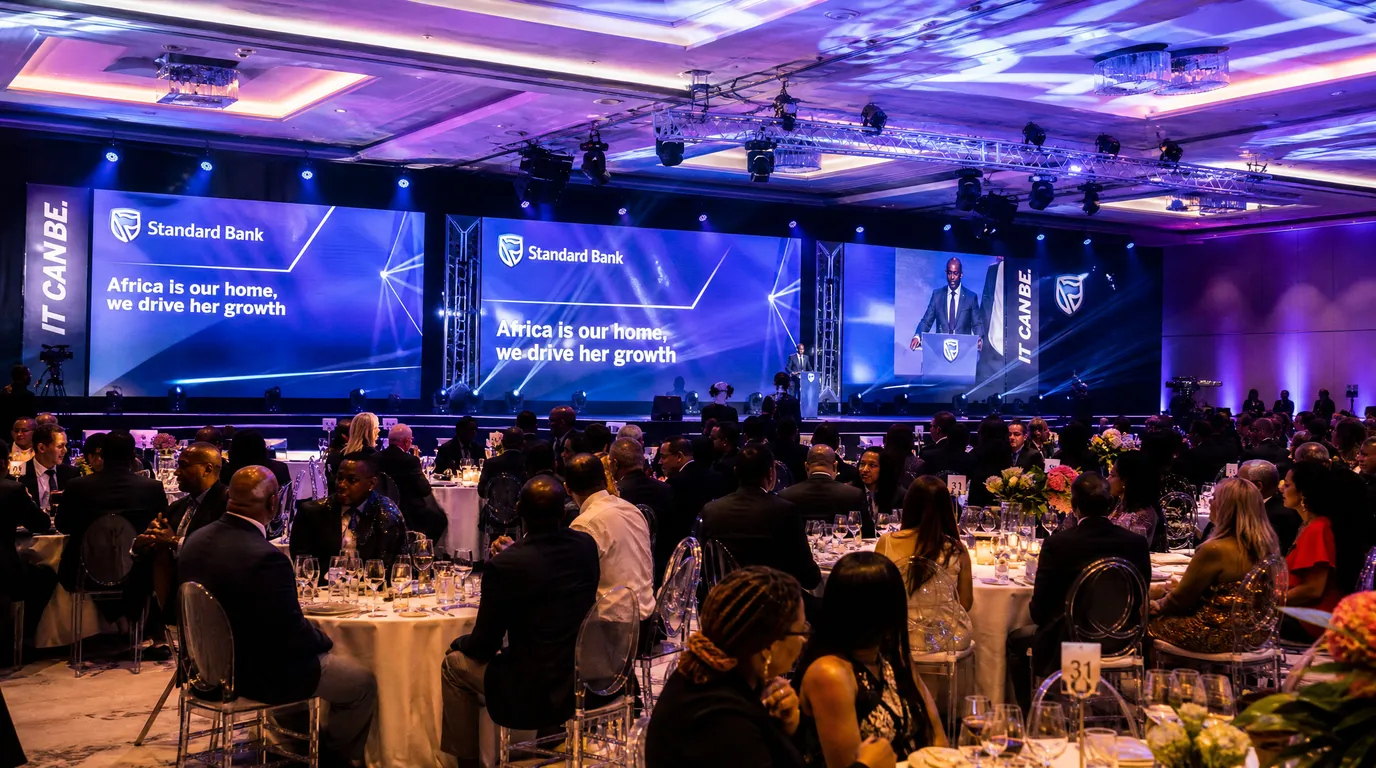
To compare 360° turnkey event management providers in South Africa, evaluate them across a consistent set of criteria: the true depth of their end-to-end scope, in-house production capability, track record with events of similar scale, creative and strategic strength, technical production assets, project management discipline, vendor network quality, budget transparency, regulatory compliance (notably SASREA, SANS 10400 and OHS), guest experience, digital and hybrid tools, national reach, empowerment credentials, sustainability practices, post-event reporting, and cultural fit. A structured scorecard, a request for evidence, and a disciplined RFP process will help you convert marketing claims into an objective, apples-to-apples comparison.
A 360° or turnkey provider is one that takes single accountability for the entire event lifecycle. In the South African market that promise must be tested against local realities such as the Safety at Sports and Recreational Events Act (SASREA) of 2010, municipal permits, Broad-Based Black Economic Empowerment (B-BBEE) procurement expectations, and the need to deliver reliably across major cities. The sections below unpack each evaluation dimension, provide a weighted scorecard, list evidence to request, and offer a shortlist of established providers so that your buying team can move confidently from longlist to signed contract.
What ‘360° Turnkey’ Actually Means in the South African Market
A genuine 360° turnkey partner owns the full journey: strategy, concept, creative design, production, logistics, hospitality, guest experience, and post-event reporting. The label sits alongside variants such as full-service, one-stop shop, and end-to-end event management, but the substance is the same. One team carries a single accountability line from brief to breakdown, and the client is not left stitching together the outputs of multiple agencies.
In practice, scopes should include event strategy and objectives, creative concepting and theming, venue sourcing, technical production (staging, sound, lighting, AV, rigging, set fabrication), delegate management, hospitality and F&B coordination, compliance and permitting, on-site execution, and post-event measurement. Common exclusions to interrogate include specialised talent bookings, bespoke fabrication, translation services, and travel arrangements for international delegates. Providers such as B&W Productions, Aleit Events, and ConfSA are positioned on this end-to-end promise, but the depth of what sits under the umbrella varies. Always ask for a services matrix that maps every line item to either the agency’s own team or a named partner, so you can see exactly where accountability lives.
Core Evaluation Criteria for Comparing Providers
Once you have confirmed that shortlisted providers genuinely operate on a turnkey basis, evaluate them against a consistent framework of roughly twelve to fourteen criteria. The dimensions below cover scope, in-house capacity, experience, creativity, technical production, project governance, vendor network, budget discipline, regulatory compliance, guest experience, technology, geographic reach, empowerment credentials, sustainability, post-event reporting, and cultural fit.
Not every dimension carries the same weight for every buyer. A large public activation demands heavy weighting on SASREA compliance and technical production, while a corporate AGM leans on hybrid technology, guest experience, and project governance. A gala dinner may prioritise creative concept and hospitality. The dimensions also interact: strong in-house capability typically improves cost control and quality assurance, while a curated vendor network can compensate for narrower internal capacity. Weight the criteria based on your event type, scale, risk profile, and internal procurement policy before scoring any provider.
Scope of Services and End-to-End Coverage
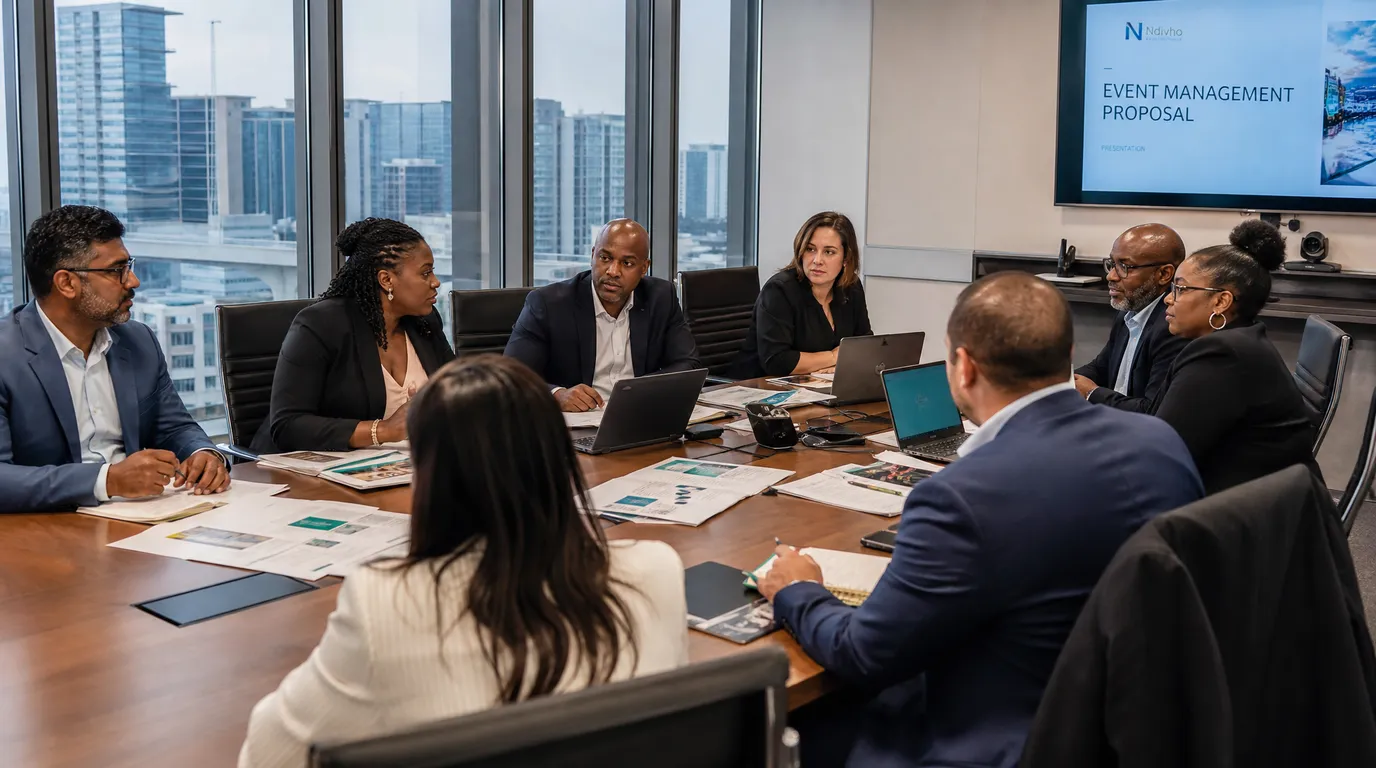
Confirm that the provider genuinely covers strategy, creative, logistics, production, hospitality, technology, compliance, and post-event measurement without material gaps. Ask for a written service matrix listing every deliverable and marking each one as in-house, curated partner, or excluded. If the matrix contains large blanks, or if the provider expects you to appoint parallel agencies for creative or technical production, the turnkey claim is weaker than advertised and coordination risk moves back to you.
In-House Capabilities vs Outsourced Services
The balance between owned infrastructure and subcontracted services affects quality control, cost, and responsiveness. Providers with owned warehouses, fleets, production teams, and stock can respond faster, standardise quality, and often carry lower markups than agencies that hire everything in. B&W Productions, for example, operates from a 2,000 m² warehouse with a dedicated fleet, while other providers such as Eventmaster own tents, staging, flooring, power, and climate control inventory. That said, no agency owns everything, so what matters is which services are core enough to be internal (project management, production, creative direction) and which are best sourced from a vetted partner network (specialist décor, entertainment, security, ablution). Ask each provider to distinguish clearly between owned assets and hired capability.
Track Record, Experience and References
Past performance is the single most reliable predictor of future execution. Assess years in business, number of events delivered, sectors served, and depth of case studies matching your event type and scale. ConfSA cites 27 years of experience and over 400 events across 19 international destinations, and holds certifications including CEPA, CMP, and CMM. GL events South Africa and Catalyst Events maintain profiles on Clutch, where third-party reviews and Leaders Matrix positioning provide independent validation. Ask for three client references from events of comparable scale to yours, and follow up personally rather than relying on curated testimonials.
Creative and Strategic Concept Development
Evaluate how each provider translates business goals into event concepts and immersive brand moments. Look at their concept development process, storytelling frameworks, theming portfolios, and evidence of strategic alignment with client objectives. Agencies such as Aleit Events, 360 Degrees, Openfield, and Lowe and Partners are frequently cited for creative and experiential strength. Ask to see two or three past concept decks, then probe how the initial brief moved through insight, big idea, creative expression, and measurable outcome. A provider that can articulate the strategic logic behind their creative choices is more likely to defend your brand under pressure.
Technical Production and AV
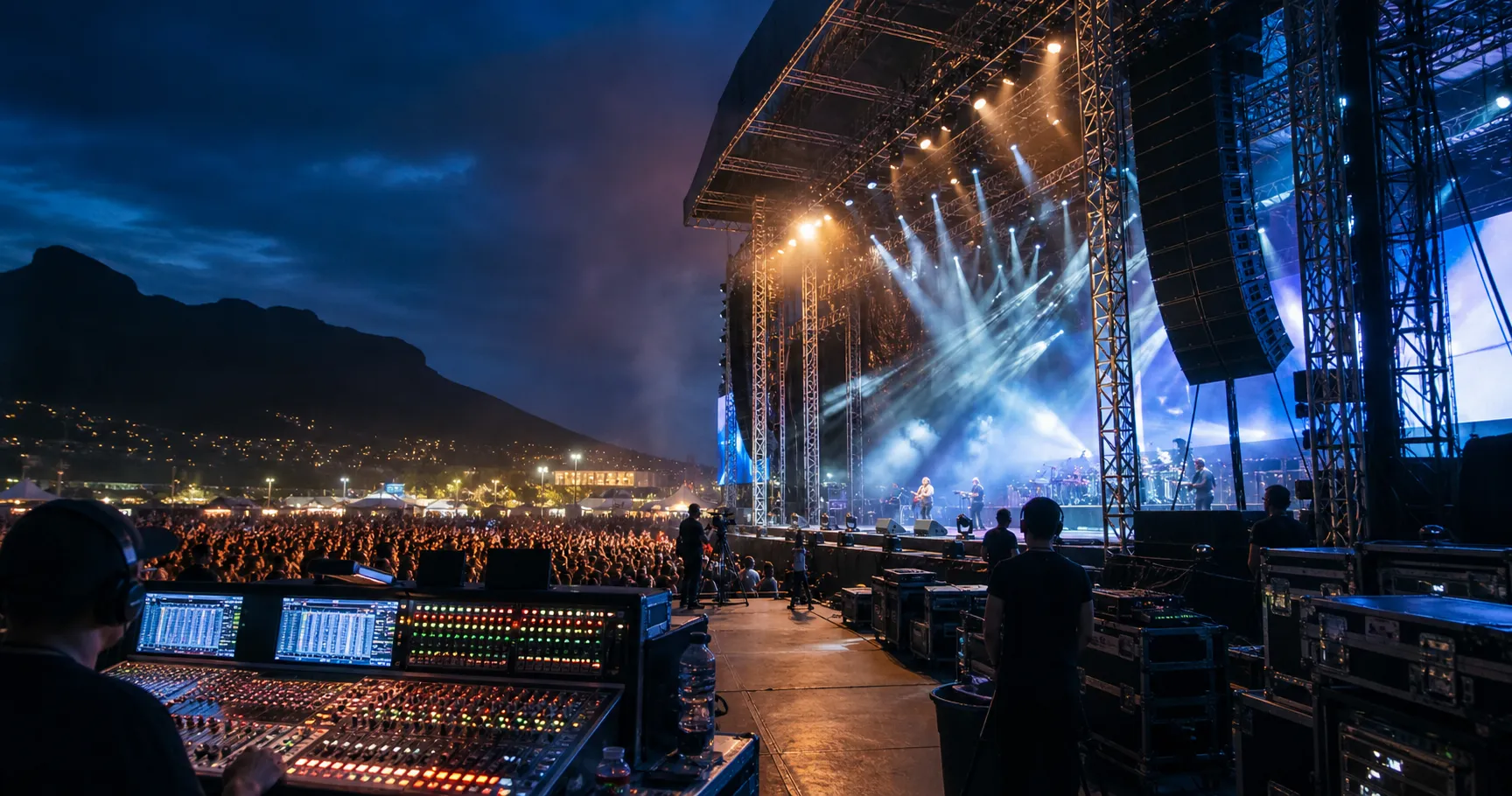
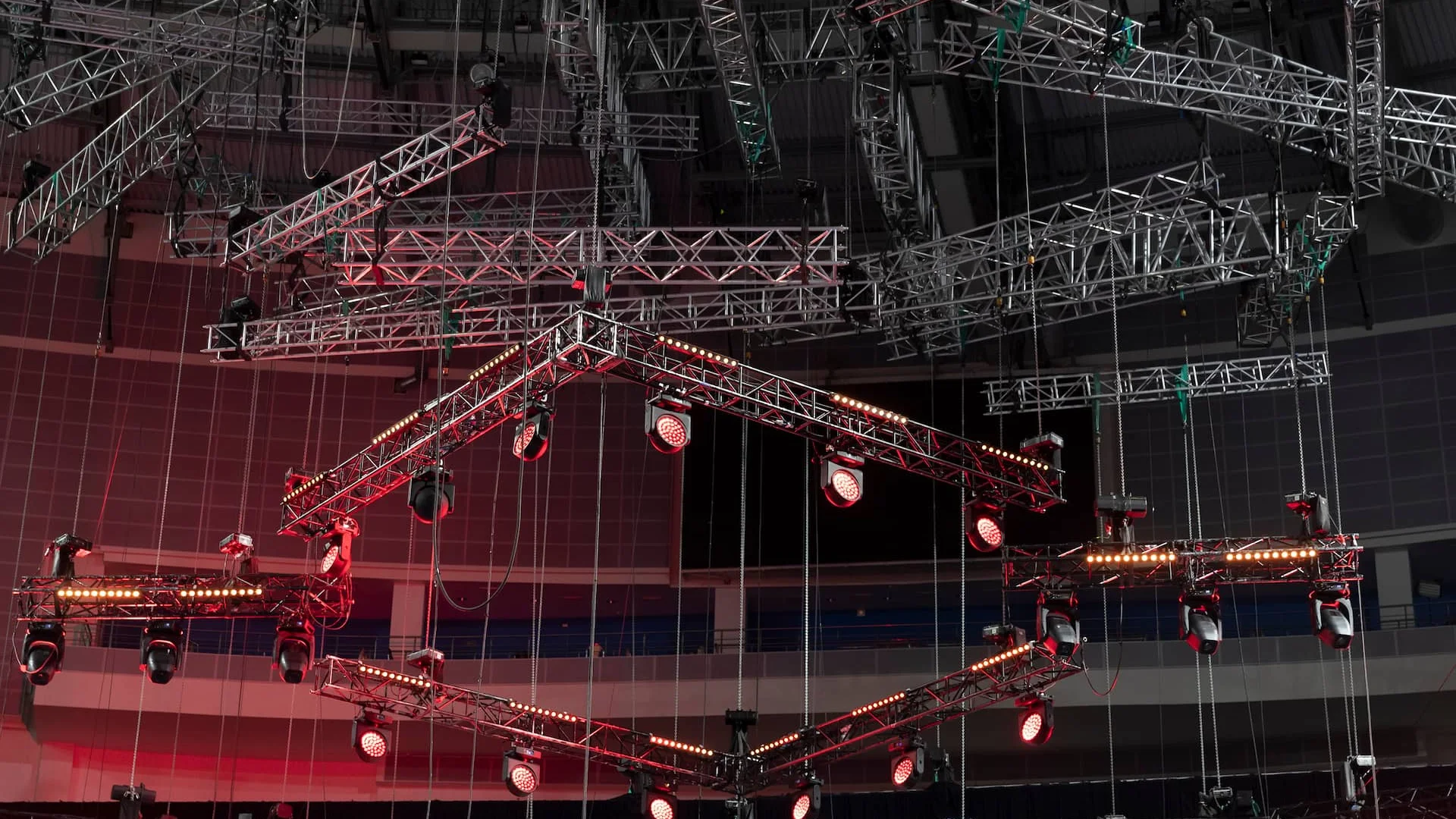
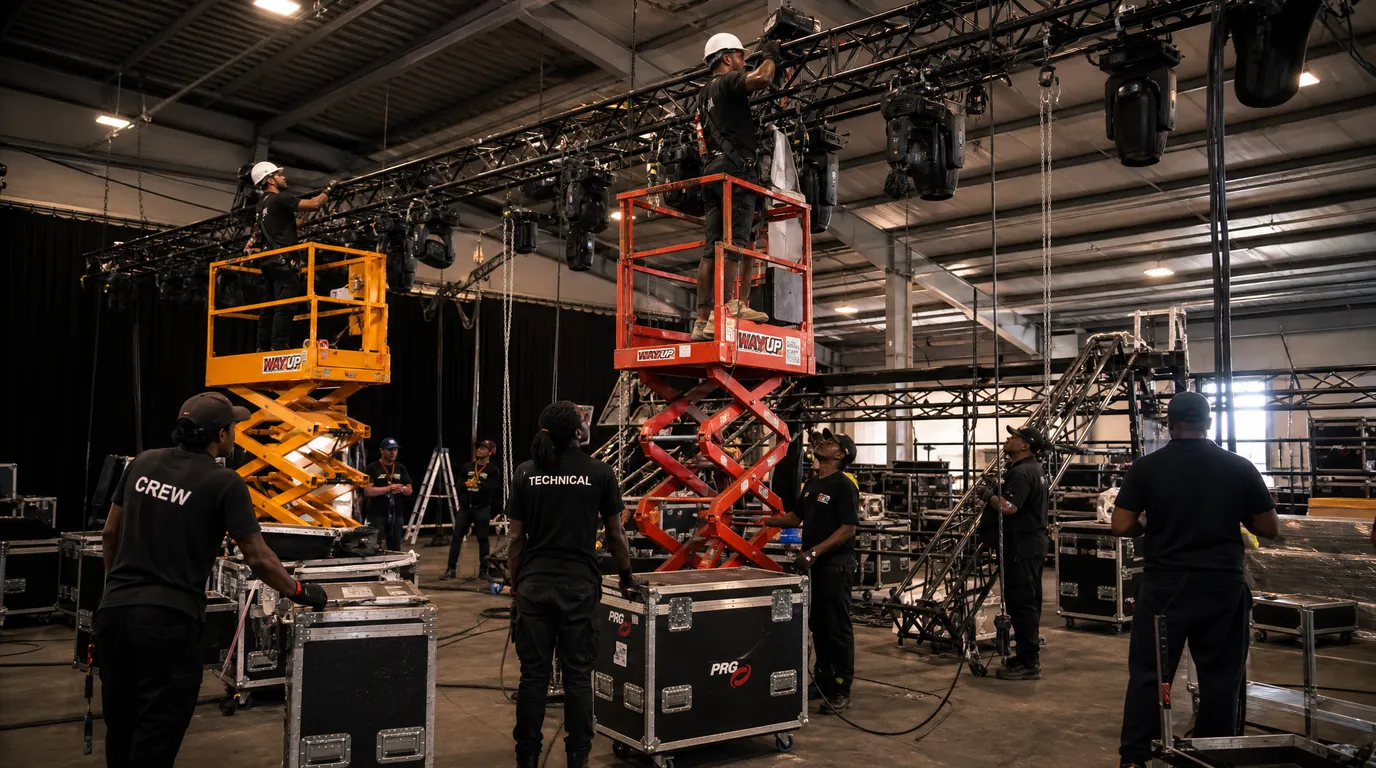
Technical production covers staging, lighting, sound, AV, rigging, set fabrication, power, climate control, and tents. Ask which of these assets are owned, which are rented, and how the agency manages technical rehearsals, redundancy, and on-site show calling. Providers with genuine in-house production capability, such as B&W Productions, can typically absorb late changes and manage complex show flows more predictably than agencies that stitch together freelance crews. Request a technical assets inventory and confirm that lead crew (technical director, show caller, lighting designer) are permanent staff rather than ad hoc hires.
Project Management and Single Point of Accountability
Turnkey delivery relies on disciplined project governance. Confirm that a single dedicated project manager will own your account, and understand their experience with events of your scale and type. Ask for the standard project timeline, milestone schedule, reporting cadence, documentation library, change control process, and escalation path. A clear governance structure — with named leads for creative, production, logistics, compliance, and finance — is a strong signal that the agency has run this playbook before.
Vendor and Supplier Network
No agency delivers everything internally, so the strength of its curated vendor network matters. Ask how suppliers are vetted, how long the relationships have run, how contracts are managed, and how the agency stands behind third-party quality. Strong networks also give leverage on preferred rates, priority availability, and integration with major venues such as the Cape Town International Convention Centre (CTICC), Durban International Convention Centre (Durban ICC), and Sandton Convention Centre. Beware of providers whose supplier lists change constantly or who cannot name specific longstanding partners.
Budget Transparency and Cost Control
Insist on itemised budgets, disclosed management fees, and explicit treatment of supplier markups. A transparent provider will show unit costs, quantities, and a clear line for their agency fee rather than burying margins inside opaque bundled numbers. Ask how cost overruns are managed, how forecasting is updated through the project, and how value engineering is applied when scope tightens. Benchmark bids like-for-like by aligning quantities, specifications, and inclusions before comparing totals — otherwise headline figures will mislead.
Risk Management and South African Regulatory Compliance
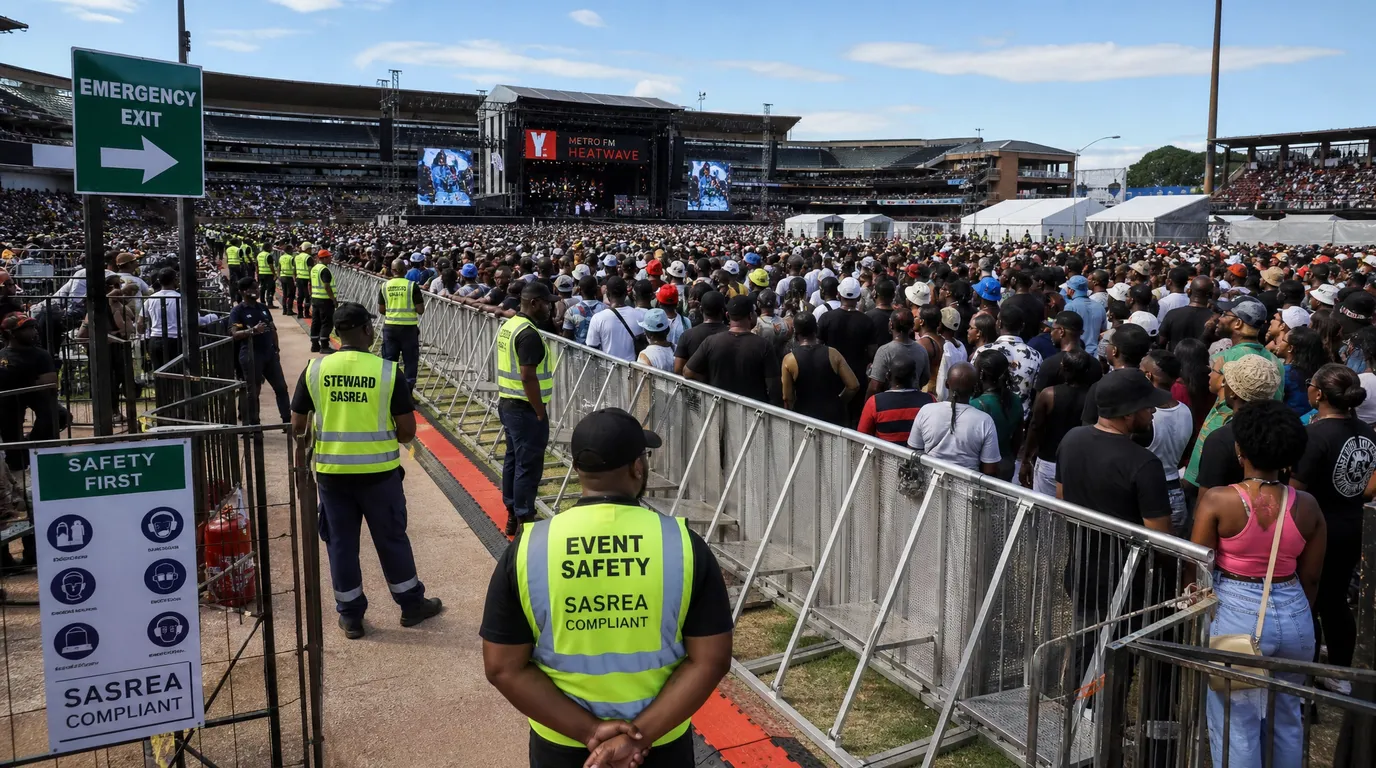
South African events sit within a specific regulatory environment. The Safety at Sports and Recreational Events Act (SASREA) of 2010 governs public gatherings, requiring risk categorisation and a coordinated safety and security plan. SANS 10400 and Occupational Health and Safety (OHS) regulations apply to structures and workplaces. A BDM permit is required for any temporary structure exceeding 900 mm in height or covering 110 m² or more. Municipal permits, alcohol licensing, and environmental health approvals may also apply depending on the venue and format. Confirm that each provider carries public liability and event insurance, produces documented risk assessments and contingency plans, and can name the compliance owner on your account.
Guest Experience and Hospitality Management
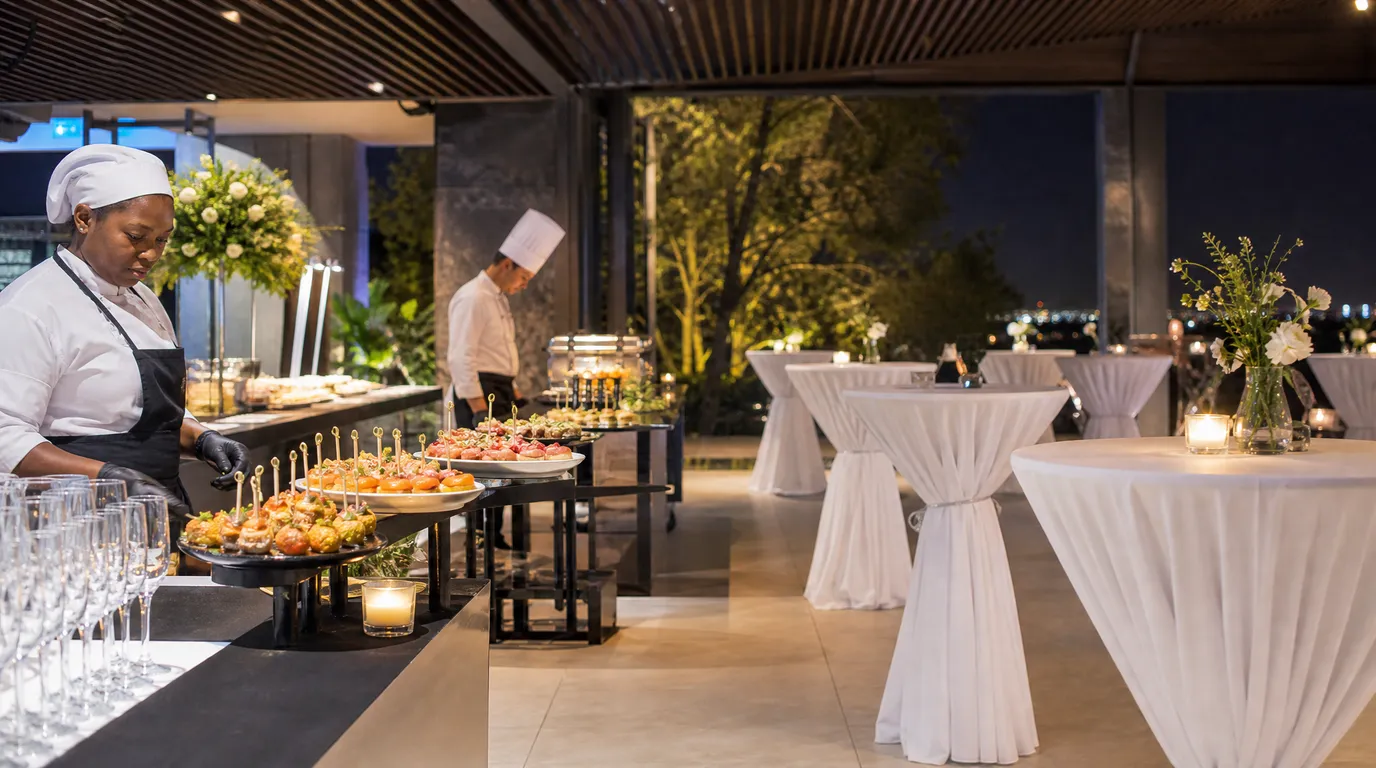
The attendee journey is where strategy becomes tangible. Evaluate how each provider manages RSVP capture, registration platforms, on-site check-in, VIP handling and protocol, accommodation and transport logistics, F&B service standards, and post-event follow-up. Ask to see a sample guest journey map for a comparable event and probe how the agency handles the small moments that shape perception — arrival, wayfinding, dietary needs, and speaker care.
Technology, Digital and Hybrid Capabilities
Modern events lean on a technology stack that covers registration, event mobile apps, live streaming, hybrid and virtual delivery, live polling and voting, and analytics. IT Event Management and similar specialists offer deep tech focus, while several full-service agencies now bundle these capabilities inside their turnkey scope. Ask which platforms the provider uses, whether the tech team is in-house, how they handle bandwidth and redundancy for streaming, and what data and dashboards you receive during and after the event.
Geographic Reach Across South Africa
If your event travels, or if you run multiple activations a year, national footprint matters. Confirm the provider’s ability to deliver consistently across Johannesburg, Cape Town, Durban, Pretoria, Bloemfontein, and Port Elizabeth, along with venue relationships in each city (including the Sandton Convention Centre and other major venues). Ask whether they have permanent teams or trusted crew in each region, how they handle logistics between provinces, and how they scale for multi-city or cross-provincial roadshows.
B-BBEE Status and Transformation Credentials
Broad-Based Black Economic Empowerment (B-BBEE) credentials influence corporate preferential procurement scorecards and are often a formal requirement in RFP responses. Request a current verified B-BBEE certificate showing the provider’s level, ownership structure, and any recognised beneficiary status. Confirm the certificate is valid on the date of appointment, and understand how the provider’s rating affects your organisation’s own scorecard reporting.
Sustainability and ESG Practices
Ask how each provider handles waste reduction, recycling, and reusable infrastructure, along with local sourcing and community impact. Accessibility considerations for delegates with disabilities and clear communication for neurodiverse attendees should be part of the plan. Increasingly, buyers also expect measurable sustainability reporting — including carbon footprint estimates for major events — which can feed directly into corporate ESG disclosures.
Post-Event Reporting and Measurement
Turnkey providers should quantify outcomes rather than simply confirm attendance. Look for a defined KPI framework, ROI analysis, attendee feedback capture, engagement analytics, and a structured post-event debrief. The report should include what worked, what did not, and data-driven recommendations for the next event. This closes the loop between strategy and execution and is a strong signal of a mature agency.
Cultural Fit and Communication Style
Soft factors decide daily collaboration quality. Assess how well the provider aligns with your brand tone, values, and internal approval culture. Watch how the team behaves in pitch meetings: do they listen, ask sharp questions, and challenge respectfully, or do they simply present slides? A people-first philosophy, a clear communication cadence, and the willingness to work as an extension of your team will show up long before the event and long after.
Weighted Scorecard: Building an Apples-to-Apples Comparison
A weighted scorecard converts opinion into structured comparison. Score each provider from 1 to 5 on every criterion, multiply by a weighting that reflects your event priorities, and total the results. A practical starting point is shown below — adjust for your event type.
| Criterion | Corporate Conference | Brand Activation | Public / Large-Scale |
|---|---|---|---|
| End-to-end scope | 10% | 10% | 10% |
| In-house capability | 8% | 10% | 12% |
| Track record | 10% | 8% | 10% |
| Creative & strategic | 8% | 15% | 8% |
| Technical production | 8% | 12% | 15% |
| Project management | 10% | 8% | 10% |
| Vendor network | 5% | 6% | 6% |
| Budget transparency | 10% | 8% | 8% |
| SASREA & compliance | 6% | 6% | 12% |
| Guest experience | 8% | 6% | 3% |
| Technology & hybrid | 10% | 4% | 2% |
| Geographic reach | 3% | 3% | 2% |
| B-BBEE | 2% | 2% | 1% |
| Sustainability & reporting | 2% | 2% | 1% |
Use the same template for every provider, agree the weights internally before scoring begins, and require each panellist to justify scores with evidence rather than impression. Total scores then tell you where each provider stands, and the underlying breakdown reveals where the gaps sit.
Evidence to Request From Each Provider
Turn marketing claims into verifiable proof by asking for a standard evidence pack. At minimum, request:
- Three case studies for events of similar type, scale, and sector, with measurable outcomes.
- Contactable client references, ideally covering the past 12 to 24 months.
- A current verified B-BBEE certificate and valid tax clearance status.
- Public liability and event insurance certificates with sums insured clearly stated.
- SASREA compliance documentation, sample risk assessments, and OHS policies.
- Two itemised sample budgets and a rate card for standard services and equipment.
- An inventory list of in-house assets (warehouse, production, AV, staging, transport).
- Named CVs for the proposed project manager and lead technical roles.
Key Questions to Ask Providers During RFP
A focused question bank surfaces substance quickly. Ask each shortlisted provider:
- Which services are delivered in-house and which are subcontracted, and to which specific partners?
- Who will be the dedicated project manager, what is their experience, and what is their current workload?
- How do you handle contingencies, weather risk, and crisis management on the day?
- How is your pricing structured, where are management fees applied, and how are supplier markups disclosed?
- How do you define success for this event, and what post-event report will we receive?
- What is your current B-BBEE level, and can you share the certificate?
- Which comparable events have you delivered in the past year, and can we speak to those clients?
- How do you approach SASREA categorisation and permitting for events of this scale?
Red Flags to Watch For
Certain warning signs recur across weaker providers. Treat any of the following as a serious red flag:
- Vague or bundled quotes that avoid line items, quantities, and unit costs.
- Reluctance to share case studies, client references, or verified certificates.
- Heavy reliance on subcontractors without transparent disclosure or vetting evidence.
- Missing, expired, or generic compliance documentation, especially around SASREA and insurance.
- No named dedicated project manager, or unclear escalation and accountability paths.
- Claims of full 360° coverage that collapse under questioning about in-house capacity.
- Inconsistent answers between the pitch team and the operational team you would actually work with.
Notable 360° Turnkey Event Management Providers in South Africa
The South African market includes a healthy number of providers positioned as turnkey partners. The list below is a starting point for shortlisting rather than an endorsement, and each provider should still be tested against the criteria above.
- B&W Productions — Long-established production-led agency with a 2,000 m² warehouse, in-house fleet, and coverage across all nine provinces. Strong on technical production, single-point accountability, and compliance experience.
- Aleit Events — Full-service agency emphasising meticulous execution and the ‘Aleit standard’ for corporate and high-end social events. Notable creative and hospitality strengths.
- GL events South Africa — Global network with local delivery capability, strong on large-scale production and international-style conference infrastructure.
- Catalyst Events — Recognised on Clutch for creative and project management strength, with a diverse corporate portfolio.
- Circa — Positions on turnkey delivery with an emphasis on curated supplier partnerships.
- 360 Degrees — Creative-led agency that ties strategy, concept, and experiential execution together.
- Openfield and Lowe and Partners — Frequently cited in the Events Guys ranking of top South African agencies for creative and experiential work.
- ConfSA — Conference specialist with 27 years of experience, CEPA, CMP, and CMM certifications, and strong hybrid capability.
- IT Event Management — Useful reference point for technology- and digital-heavy events, including hybrid delivery.
Directories such as Clutch and listicles from Events Guys can help expand a shortlist, but always validate ranking positions with your own reference checks and site visits.
Selection Guidance by Event Type and Scale
Translate the framework into practical shortlists by matching provider strengths to event type. For corporate conferences and AGMs, prioritise providers with strong conference operations, hybrid and streaming capability, delegate management, and mature project governance. For brand activations and experiential events, weight creative concept development, fabrication, and experiential design more heavily. For gala dinners and awards, prioritise hospitality, guest journey design, staging and lighting, and VIP protocol. For large-scale public events, weight SASREA and safety compliance, crowd management, and technical infrastructure, and require documented category classification and safety planning. For multi-city roadshows and hybrid events, confirm national reach, consistency of crew across cities, and a single technology backbone that can carry the roadshow.
Next Steps: From Shortlist to Signed Contract
Once your evaluation is complete, move from analysis to appointment with a clear sequence. Issue a structured RFP built around the scorecard criteria and evidence checklist, giving each provider a level playing field. Conduct site visits to their offices and warehouses, and insist on meeting the actual project team that will run your event — not just the pitch leads. Negotiate the statement of work, deliverables, milestones, and payment schedule against the scorecard so that contractual obligations mirror the promises made during evaluation. Before kick-off, confirm signed contracts, valid insurance certificates, current B-BBEE documentation, and all necessary compliance approvals. With this discipline in place, your chosen 360° turnkey partner should be able to take single accountability for the event from concept to post-event report, and your team can focus on the outcomes that matter.