The short version
If you are appointing a national experiential partner in South Africa, three things matter: verifiable reach across the metros (and ideally all nine provinces), genuine in-house delivery instead of a freelancer chain, and clean procurement credentials — insurance, safety, and B-BBEE.
A national experiential firm, in the South African context, is one that can plan, staff, fabricate, transport and measure live brand experiences across provincial borders — without stitching together an unfamiliar chain of freelancers each time. This guide is for marketing leads, brand managers and procurement teams appointing a partner for roadshows, sampling campaigns, product launches, retail activations, immersive events or container pop-ups. Below: the criteria that matter, the providers worth considering, budget expectations, an RFP playbook, and the red flags that predict poor delivery.
Key considerations before you hire
Before shortlisting anyone, agree internally on what “national” actually means for your brief. Plenty of Johannesburg-based agencies market themselves as national but rely on ad hoc partners in Cape Town, Durban and secondary cities. A genuine national partner operates from multiple owned hubs, keeps a permanent regional team, and deploys the same standards of staffing, safety and finish in every market.
Next decision: full-service versus specialist. A turnkey partner handles strategy, creative, fabrication, staging, AV, staffing and logistics under one roof — which reduces coordination risk. A specialist may be preferable when your brief is narrow, e.g. container activations, sports sponsorship, or high-volume sampling.
Whichever route you choose, insist on the credentials that gate corporate spend in South Africa:
- A valid B-BBEE certificate (or exemption) at a level that fits your procurement scorecard.
- Public liability and event insurance, plus proof of Occupational Health and Safety compliance.
- Documented processes for SASREA obligations and municipal permits in every activation city.
- The ability to measure return on objectives, not just footfall.
- An itemised, transparent budget that lets you compare quotes apples-to-apples.
National reach and multi-city execution
Ask each contender to map its footprint city by city. Note the difference between owned offices with permanent staff and pure partner or freelance arrangements. Both models can work — but accountability and quality control differ significantly.
At minimum, a national partner should demonstrate credible delivery in Johannesburg, Cape Town and Durban. Serious contenders extend into Pretoria, Bloemfontein, Gqeberha (Port Elizabeth), East London, Polokwane, Nelspruit and Kimberley. Providers such as B&W Productions, MegaWorxx, Matriarch, ARISE Brand Activation and DERWALT publicly claim multi-city and in some cases all-nine-provinces coverage. Verify the claims: ask for warehousing addresses, fleet inventory, local team-leader names, and recent case studies per city.
Operational assets that separate a genuine national firm from a broker:
- Owned warehousing and fabrication workshops in more than one province.
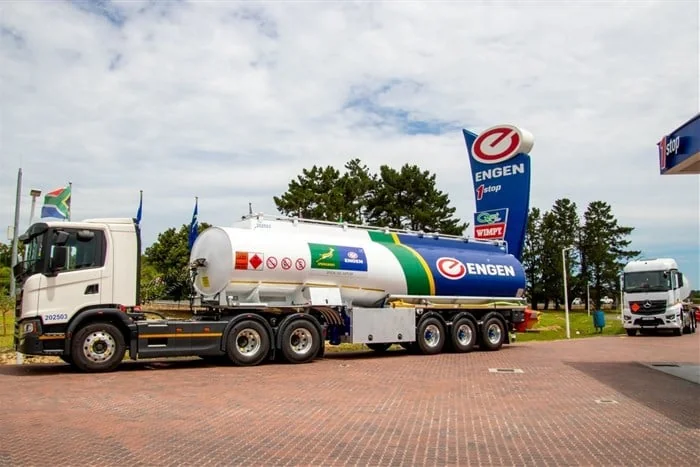
- A branded fleet capable of moving stands, containers and AV kit between provinces.
- Regional team leaders and activation managers who live in the market they serve.
- Contingency plans for load-shedding, weather, freight delays and last-minute supplier failure.
Full-service vs. specialist agencies
Full-service agencies pull strategy, creative, production, staffing and reporting into one contract. This suits complex briefs, national roadshows, multi-stakeholder launches, and campaigns where you want a single throat to choke. B&W Productions and DERWALT position themselves as 360-degree production houses across the major metros. GL events South Africa brings the scale of an internationally networked group into corporate and large-format work. MegaWorxx and ARISE Brand Activation combine strategy, fabrication and field staffing under one roof.
Specialists earn their place when the brief is deep rather than wide. ARISE Brand Activation is the go-to for branded shipping-container pop-ups. Sports and sponsorship activations sit more naturally with Levergy. Isilumko Activate and Tradeway are strong on high-volume promoter and sampling deployments.
To pressure-test whether capabilities are genuinely in-house, ask the agency to walk you through:
- The strategy and insights team, including how briefs are interrogated.
- Creative and design capacity, with named leads and portfolios.
- Fabrication and workshop facilities, with photos and addresses.
- Staffing databases and training programmes for brand ambassadors.
- The measurement and reporting stack used post-campaign.
Types of experiential activations you can commission
South African experiential firms typically deliver a broad menu of formats. Matching the brief to the right specialism improves outcomes and cost efficiency:
- National roadshows across metros, townships and secondary cities.
- Mall and retail activations, in-store demos and sampling campaigns.
- Product launches, VIP reveals and themed immersive events.
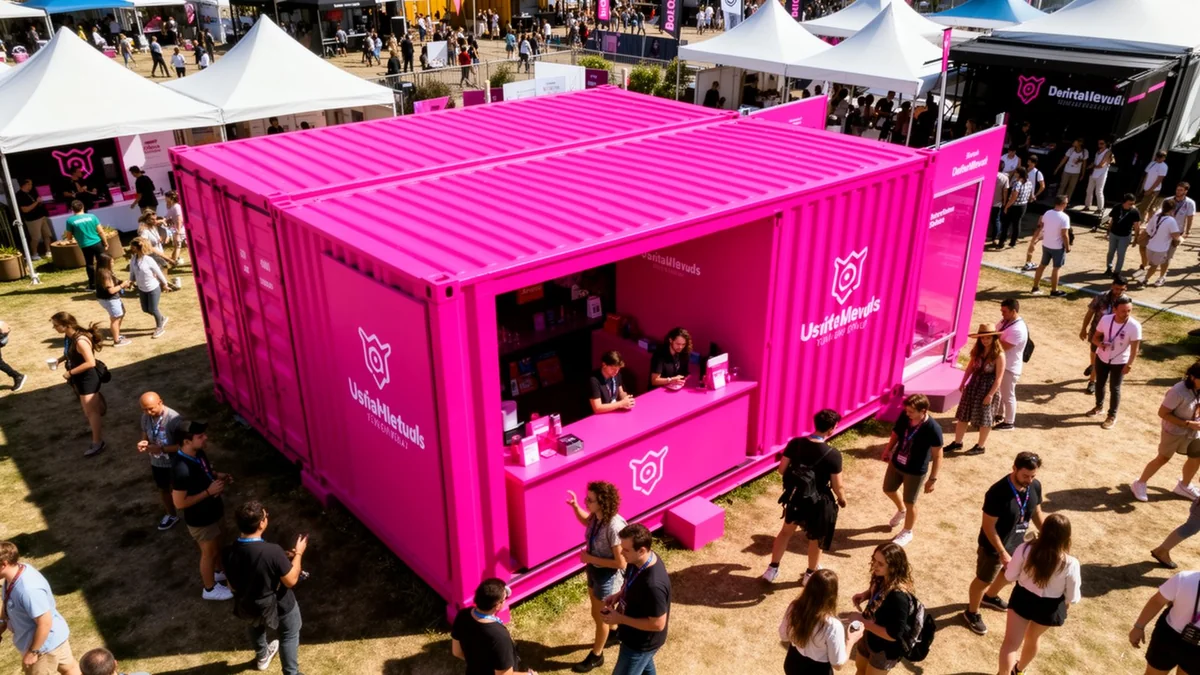
- Pop-up shops and branded shipping-container activations in 3m, 6m and 12m formats.
- Corporate experiences, conferences, incentives and hybrid or virtual events.
- Sports, music and sponsorship activations tied to properties or festivals.
Brand ambassadors, promotional staff and cultural fit
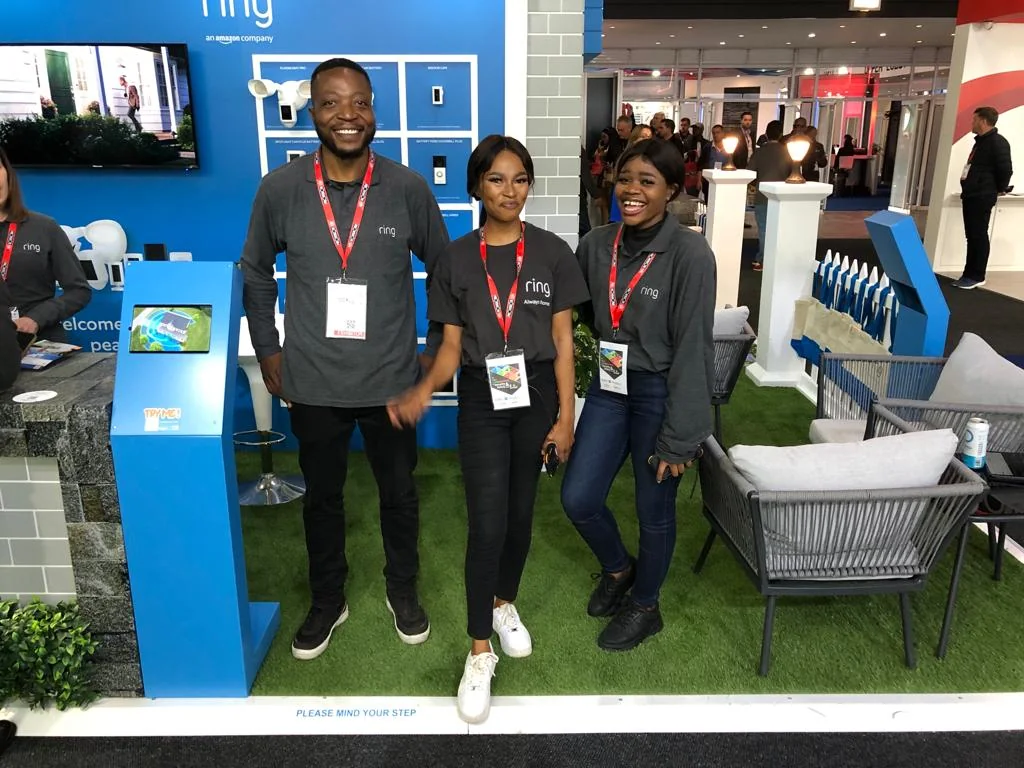
The human layer often makes or breaks an activation. The strongest national firms maintain vetted databases of brand ambassadors, team leaders, MCs and hostesses in each region, with clear standards for recruitment, background checks, training and performance management. B&W Productions, MegaWorxx, Matriarch, Isilumko Activate, Tradeway and BrandGravity all position field-staff quality as a core differentiator.
South Africa has 11 official languages and dramatically different regional cultures. A promoter who thrives in a Sandton mall will not automatically connect with shoppers in a Mthatha township or on a Cape Flats forecourt. Ask how the agency casts for linguistic ability, cultural fit and regional accents, and how team leaders brief and coach staff before each shift.
Also probe payroll and labour compliance. Field staff should be paid on documented rates, with clear contracts, UIF where applicable and adherence to fair labour practices. This protects your brand from reputational risk — and ensures ambassadors show up motivated rather than exploited.
Compliance, permits, insurance and B-BBEE
A national firm should shoulder the regulatory burden on your behalf. The Safety at Sports and Recreational Events Act (SASREA) sets out safety obligations for gatherings, including risk categorisation, event safety plans, crowd management and appointed safety officers. Your agency must be fluent in these obligations and able to produce documentation on request. Beyond SASREA, expect the agency to manage:
- Municipal permits for public space, road closures, noise and signage in every activation city.
- Public liability insurance appropriate to the scale of the event, plus event cancellation cover where relevant.
- Occupational Health and Safety Act compliance and COIDA registration for field staff.
- Sector-specific rules for alcohol, tobacco, financial services and FMCG sampling.
- Crowd management plans, medical standby, fire safety and evacuation procedures at scale.
On procurement: B-BBEE status directly affects the recognition points on your scorecard. Always request a valid B-BBEE certificate, sworn affidavit, or exemption letter, and check the expiry date. Some firms operate at Level 1, 2 or 4 contributor status; Catalyst Events, for example, publicly states Level 2. B&W Productions is a registered EME (Exempt Micro Enterprise), which delivers strong recognition on qualifying spend without the paperwork of a full BEE audit.
Measurement, ROI and reporting
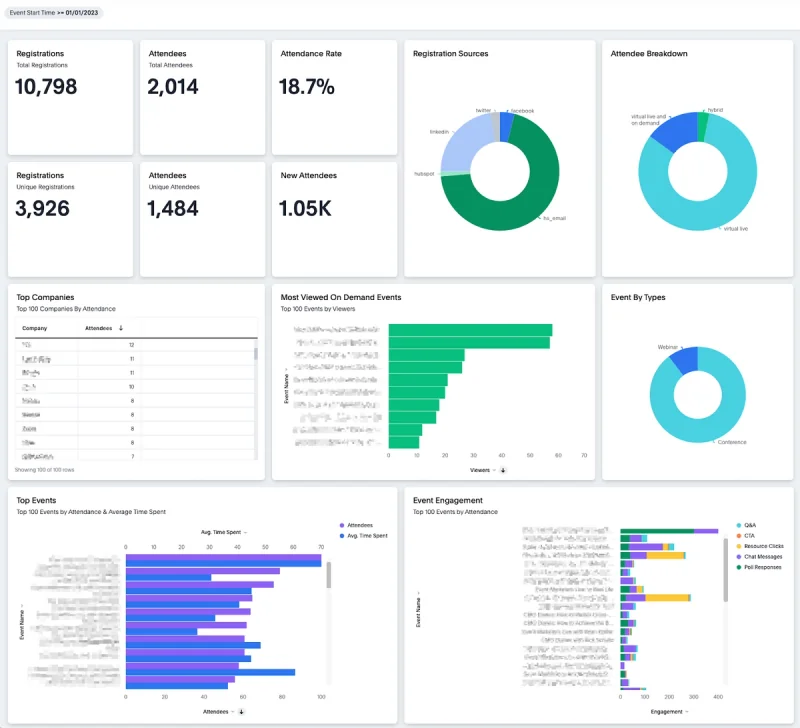
Modern experiential is not judged on footfall alone. A credible national partner will help you define KPIs before the campaign, capture data during, and report against commercial outcomes afterwards. Expect coverage of engagements, qualified interactions, samples redeemed, leads captured, opt-ins, conversions, sales lift and cost per qualified interaction.
Matriarch, which claims engagement with over 35 million consumers annually across its metro hubs, positions measurable ROI and cultural relevance at the centre of its proposition. Triple Eight goes further by combining experiential delivery with in-house actuarial-style ROI modelling, applied to blue-chip clients such as Coca-Cola and Cadbury across an African footprint. B&W Productions delivers post-event dashboards spanning attendance, dwell time, sampling redemption and lead capture, cross-checked against the original brief.
Budget expectations and cost transparency
Experiential budgets in South Africa vary enormously. Small tactical activations can run under R200,000, mid-sized national campaigns often sit in the R1 million to R4 million range, and multi-city roadshows or flagship launches can reach seven figures and beyond. To compare proposals fairly, demand a line-itemised budget covering:
- Strategy, creative and account management fees.
- Staffing — brand ambassadors, team leaders and on-ground management.
- Fabrication, print, signage and branded assets.
- Logistics, transport, warehousing and installation.
- Permits, municipal fees, safety officers and insurance.
- Technology, data capture and reporting.
- Agency fee or margin, stated as a percentage.
- A contingency line, typically 5–10 percent.
Understand the commercial model. Fixed-fee projects give price certainty but can hide fat. Cost-plus arrangements are more transparent but require trust in the declared markup. Retainers suit ongoing programmes. Watch for hidden costs: undisclosed markups on third-party suppliers, staff transport charges added late, or contingency lines that are really margin.
Reputable national experiential firms to consider
The shortlist below is drawn from providers that repeatedly appear across South African directories, self-reported capability statements and buyer references. Use it as a starting point, then interrogate each provider against the criteria above.
B&W Productions — Editor’s Pick
Founded in 1993 and headquartered in Randvaal, Gauteng, B&W Productions is one of the longest-running experiential and event powerhouses in South Africa. Over three decades the team has delivered more than 10,000 events for 500+ clients, from corporate conferences and product launches to national roadshows, activations and immersive brand experiences. Full-service, in-house delivery covers strategy and creative, structures and staging, AV, fabrication, brand ambassadors, logistics and post-event measurement — backed by an owned truck fleet and warehousing. Recognised as Top Event Supplier 2025, B&W offers 30+ permanent staff on 100% medical aid, EME B-BBEE recognition, and the operational depth to run flagship corporate events and multi-city campaigns end-to-end.
GL events South Africa
Part of a global events group with local operations that bring international scale and process into South African corporate and large-format work. Full-service event and experiential capability, including staging, structures, temporary infrastructure and hospitality environments. Strong candidate when the brief involves major public gatherings or complex engineered build-outs.
Matriarch
Culture-led experiential agency with hubs in Johannesburg, Cape Town and Durban. Reports engaging over 35 million consumers annually across its network. Proposition centres on immersive, culture-shifting experiences measured in commercial terms — a fit for brands that want national reach paired with local cultural nuance.
Triple Eight
Creative experiential agency that combines campaign delivery with in-house ROI modelling rooted in actuarial thinking. Attractive to finance-conscious marketing teams who want experiential spend justified in the same language as media. Operates across multiple African countries; blue-chip clients include Coca-Cola and Cadbury.
DERWALT
Full-service experiential production house that takes projects from concept through 360-degree execution. Presence across Johannesburg, Durban, Cape Town, Pretoria, Bloemfontein and Gqeberha, with AV and staging, interactive installations, fabrication, staff sourcing and on-site management.
ARISE Brand Activation
Brand activation and container specialist delivering across all nine provinces. Signature offering: branded shipping-container pop-up shops in 3m, 6m and 12m sizes, adaptable to retail, bar, sampling and exhibition formats. Also handles roadshows, fabrication and brand ambassador supply.
Catalyst Events
Cape Town–based experiential and themed events planner with nationwide execution capability. Focus on immersive narrative design, sensory environments and precisely produced themed events. Publicly reports Level 2 B-BBEE contributor status.
Isilumko Activate
One of the longer-established promotional staffing and field marketing agencies in South Africa. Strong nationwide brand ambassador networks, retail activation, merchandising and field marketing infrastructure. Natural fit when the campaign leans on trained promoters and in-store presence rather than heavy fabrication.
Other notable agencies
- MegaWorxx — brand activation and experiential marketing, sampling, in-store, POS collateral and branded container/truck OOH.
- Levergy — specialist in sports and sponsorship activations tied to a rights holder, team or property.
- EXP Agency SA — experiential specialist with national capability, suited to integrated brand experience briefs.
- Tradeway — deep field-marketing bench with retail and merchandising strength.
- BrandGravity — regionally attuned activation partner strong on culturally tuned campaigns and localised execution.
How to run an effective RFP and evaluate agencies
A structured RFP process protects budget and quality. Start with a clear written brief: business objectives, target audience, target cities and provinces, campaign duration, non-negotiable KPIs, a realistic budget band, and mandatory compliance requirements including B-BBEE. Ambiguous briefs produce ambiguous responses.
Build a long list of six to ten agencies, narrow to a shortlist of three to five, and score responses against a weighted matrix that reflects your priorities:
| Criterion | Weight |
|---|---|
| Strategic thinking and insight | 15% |
| Creative response to the brief | 20% |
| Operational capability, national footprint and safety | 20% |
| Measurement and reporting approach | 10% |
| Commercials and cost transparency | 20% |
| B-BBEE and compliance credentials | 10% |
| Cultural fit and team quality | 5% |
Run pitch meetings with both the strategy and delivery leads present. Where feasible, visit the agency’s warehouse, workshop or studio to see production capability with your own eyes. Always undertake reference checks, and ask referees specifically about issues that arose and how they were resolved — not just what went well.
Key questions to ask in the pitch
- Which cities do you operate in with your own team, and which do you subcontract? Please name your regional leads.
- How do you recruit, vet, train and manage brand ambassadors in each region, and how do you cover multiple official languages?
- What is your process for permits, insurance and SASREA compliance across the cities in this brief?
- Which KPIs will you commit to, and what does your post-campaign report look like?
- What is your current B-BBEE level, and can you share a valid certificate or exemption letter?
- Can you show at least three verifiable case studies of comparable national campaigns, including client references?
- What happens if load-shedding, weather or a supplier failure disrupts a leg of the campaign?
Red flags and common pitfalls
- Inability or unwillingness to share verifiable case studies with contactable references.
- Vague, non-itemised pricing and reluctance to break out fees, markups and third-party costs.
- A polished pitch team that is different from the operational team you would actually work with.
- Heavy, undisclosed reliance on subcontractors, especially outside Johannesburg.
- No documented safety plan, no named safety officer, or unclear insurance cover.
- No clear measurement framework beyond footfall and reach.
- Overly optimistic timelines that ignore permits, fabrication lead times and inter-provincial freight.
Frequently asked questions
What is a national experiential events firm?
In the South African context, a national experiential firm is one that can plan, staff, fabricate, transport and measure live brand experiences across provincial borders — without stitching together an unfamiliar chain of freelancers each time. A genuine national partner operates from multiple owned hubs, keeps a permanent regional team, and deploys the same standards of staffing, safety and finish in every market.
What does "national reach" actually mean when hiring an experiential agency?
At minimum, a national partner should demonstrate credible delivery in Johannesburg, Cape Town and Durban. Serious contenders extend into Pretoria, Bloemfontein, Gqeberha (Port Elizabeth), East London, Polokwane, Nelspruit and Kimberley. Verify the claims: ask for warehousing addresses, fleet inventory, local team-leader names, and recent case studies per city — not just a map on a slide.
Should I choose a full-service agency or a specialist?
A turnkey partner handles strategy, creative, fabrication, staging, AV, staffing and logistics under one roof, which reduces coordination risk and suits complex national briefs. A specialist is preferable when the brief is narrow — for example branded shipping-container pop-ups, sports sponsorship activations, or high-volume sampling. Match the model to the shape of your campaign.
How much does a national experiential campaign cost in South Africa?
Budgets vary enormously. Small tactical activations can run under R200,000, mid-sized national campaigns often sit in the R1 million to R4 million range, and multi-city roadshows or flagship launches can reach seven figures and beyond. Always demand a line-itemised budget so you can compare quotes apples-to-apples.
What compliance credentials should a national experiential firm have?
Insist on a valid B-BBEE certificate or exemption at a level that fits your scorecard, public liability and event insurance, proof of Occupational Health and Safety compliance, and documented processes for SASREA obligations and municipal permits in every activation city. Ask to see recent event safety files as evidence — not just promises.
How do I measure the ROI of an experiential campaign?
Modern experiential is not judged on footfall alone. A credible partner helps you define KPIs before the campaign, captures data during, and reports against commercial outcomes afterwards — engagements, qualified interactions, samples redeemed, leads captured, opt-ins, conversions, sales lift and cost per qualified interaction.
What are the biggest red flags when appointing an experiential agency?
Inability to share verifiable case studies with contactable references; vague, non-itemised pricing; a polished pitch team that differs from the operational team; heavy undisclosed subcontracting outside Johannesburg; no documented safety plan or named safety officer; no measurement framework beyond footfall; and timelines that ignore permits, fabrication lead times and inter-provincial freight.
How should I run an RFP for a national experiential partner?
Start with a clear written brief (objectives, audience, target cities, duration, non-negotiable KPIs, budget band and B-BBEE requirements). Build a long list of six to ten agencies, narrow to three to five, and score responses against a weighted matrix. Run pitch meetings with both strategy and delivery leads present, visit warehouses where feasible, and always undertake reference checks.
Appointing a national experiential partner?
Over 10,000 events delivered since 1993. 500+ clients. 30+ permanent staff. Top Event Supplier 2025. Tell us your brief and we’ll show you the owned fleet, warehousing and regional teams behind genuine national delivery.